A Practical Guide for Digital Marketers and Business Owners Who Want Marketing That Actually Works
Introduction: Marketing Doesn’t Fail Because of Tools; It Fails Because of Process
Most people assume marketing fails because of bad ads, low budgets, or the wrong platform.
But when you work closely with real businesses, a different truth appears.
Marketing usually fails because there is no workflow behind it.
- Campaigns start randomly.
- Content is posted without direction.
- Ads run without proper tracking.
- Reports are created only when a client asks.
- Over time, marketing feels chaotic instead of strategic.

A simple marketing workflow changes this. It turns marketing into a repeatable system instead of a series of experiments.
At Ontogen Digital, we’ve worked with small and mid-sized businesses across industries and markets. The biggest difference between companies that grow and companies that struggle is rarely creativity. It is a structure.
This guide explains how real marketing work gets done from the moment a client signs up to the moment results are delivered and payments are completed.
If you are an aspiring digital marketer, this can act as your practical checklist.
If you are a business owner, this will help you understand what good marketing management should look like.
What a Marketing Workflow Really Means
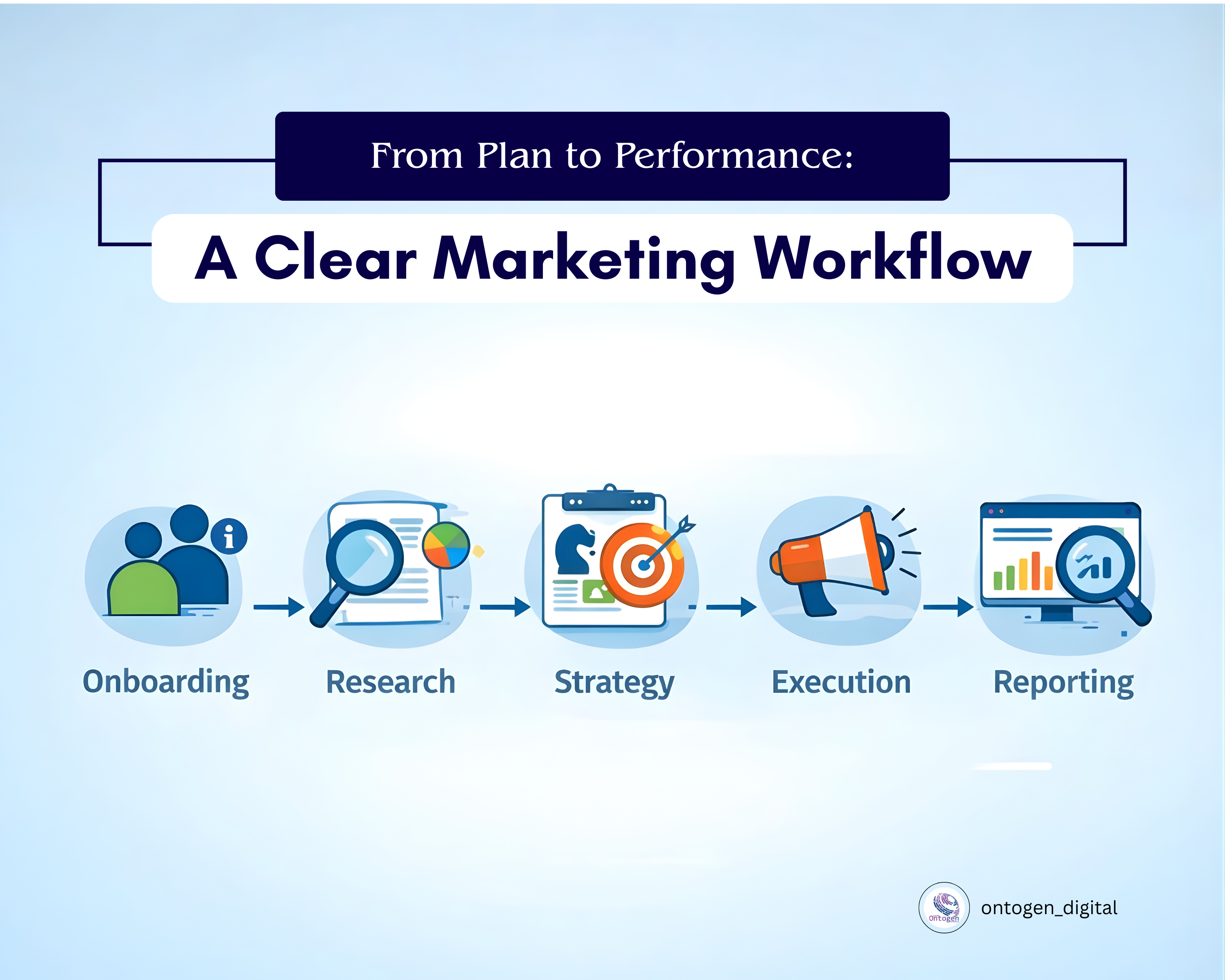
A marketing workflow is simply the step-by-step system that defines how marketing work moves from idea to execution to results.
It answers practical questions:
- What happens first?
- What happens next?
- Who is responsible?
- When do approvals happen?
- How is performance measured?
- When and how are payments handled?
Without a workflow, every client project feels different and messy. With a workflow, work becomes predictable and easier to manage.
A good workflow protects three things at once: your time, the client’s money, and the relationship between both.
Many marketers spend years learning ad platforms and tools. Very few learn how to manage client work from start to finish. That gap is what often limits growth.
A workflow is not bureaucracy. It is clarity.
Why Simple Workflows Work Better Than Complex Systems
You don’t need 15 tools and complicated dashboards to run good marketing.
Simple workflows work because they are easier to follow and easier to repeat. They reduce mistakes, improve communication, and help clients feel confident.
A broken workflow shows clear signs. Clients feel confused. Deadlines keep shifting. Files are hard to find. Payments become awkward. Results feel unclear.
A simple system prevents these problems before they begin.
This is especially important when working with SMBs. Small businesses value clarity and results, not complexity.
Stage 1: Pre-Onboarding Before You Say Yes to a Client
A strong workflow begins before a contract is signed.
Not every paying client is a good client. Some businesses are not ready for marketing. Some expect instant results. Some do not respect process.
A short qualification conversation saves months of stress.
You need to understand their business model, past marketing efforts, and expectations. When a client wants 100 leads on a tiny budget or expects results in a week, it is your responsibility to educate them.
For example, a home services company in Florida may want aggressive advertising. But if they can only handle a few jobs per week and respond slowly to enquiries, scaling ads will only create pressure. Marketing must match operational capacity.
Scope clarity also starts here. Are you handling only ads or full-stack marketing, including SEO, content, and branding? When scope is unclear, misunderstandings happen later.
At Ontogen Digital, scope and expectations are always clarified early. This keeps relationships healthy and long-term.
Stage 2: Client Onboarding Setting the Foundation
Onboarding shapes the client’s first real impression of your professionalism.
A structured onboarding makes even a small team look reliable. A messy one creates doubt immediately.
Clients feel more comfortable when they know what happens next. A welcome message outlining timelines, communication channels, and approvals removes uncertainty.
Access collection should be organized. Website CMS access, analytics, ad accounts, and brand assets should be gathered in one place. Random requests through chat lead to confusion later.
A strong onboarding questionnaire helps you understand audience details, competitors, and brand voice. It also helps clients think strategically about their own business.
Clear contracts and billing terms matter. Defined deliverables and payment cycles protect both sides. Professional structure builds trust.
Stage 3: Research and Discovery Thinking Before Doing
Good marketers do not rush to launch.
Research prevents wasted budget. It shows what works in the industry and where opportunities exist.
Every industry behaves differently. A real estate business markets differently than a SaaS company. A local dentist markets differently than an e-commerce store.
Studying competitor ads, reviews, and offers reveals patterns. For example, if dental clinics in California all promote free consultations, a new clinic needs a stronger or more unique offer to stand out.
Audience clarity is just as important. Marketing to “everyone” rarely works. Defining location, income range, and pain points sharpens messaging.
Offer strength is critical. Many campaigns fail not because of bad ads but because the offer lacks urgency or value.
When Ontogen Digital creates strategies, research always comes first. Decisions are based on understanding, not guesswork.
Stage 4: Strategy and Planning Creating Direction
Strategy turns research into a practical plan.
Channel selection should match business goals. A local HVAC business often benefits more from Google Ads and local SEO than from Instagram trends. Choosing platforms based on logic saves money.
Budget allocation also needs reasoning. High-intent channels usually deserve priority because they attract people ready to buy.
Simple funnels often perform best for SMBs. An ad leads to a focused landing page, which leads to a form or booking. Overly complex funnels slow things down.
Content direction should align with real customer questions and seasonal demand. When content answers real concerns, engagement grows naturally.
Presenting the strategy in simple language helps clients understand the roadmap. Clients who understand the plan stay patient during testing phases.
Stage 5: Setup and Systems Building the Base
Skipping setup leads to problems later.
Tracking systems like analytics and conversion tracking allow you to prove results. Without tracking, marketing becomes opinion-based instead of data-based.
Lead tracking is equally important. Even a simple spreadsheet improves visibility. Many SMBs lose business because no one tracks follow-ups.
Landing pages should stay focused. One clear goal, fast loading speed, and strong calls to action convert better than flashy designs. A well-built site from Ontogen’s web development services ensures this foundation is strong.
Basic automation improves response time. Faster responses often mean higher conversions.
Stage 6: Execution – Where Strategy Meets Reality
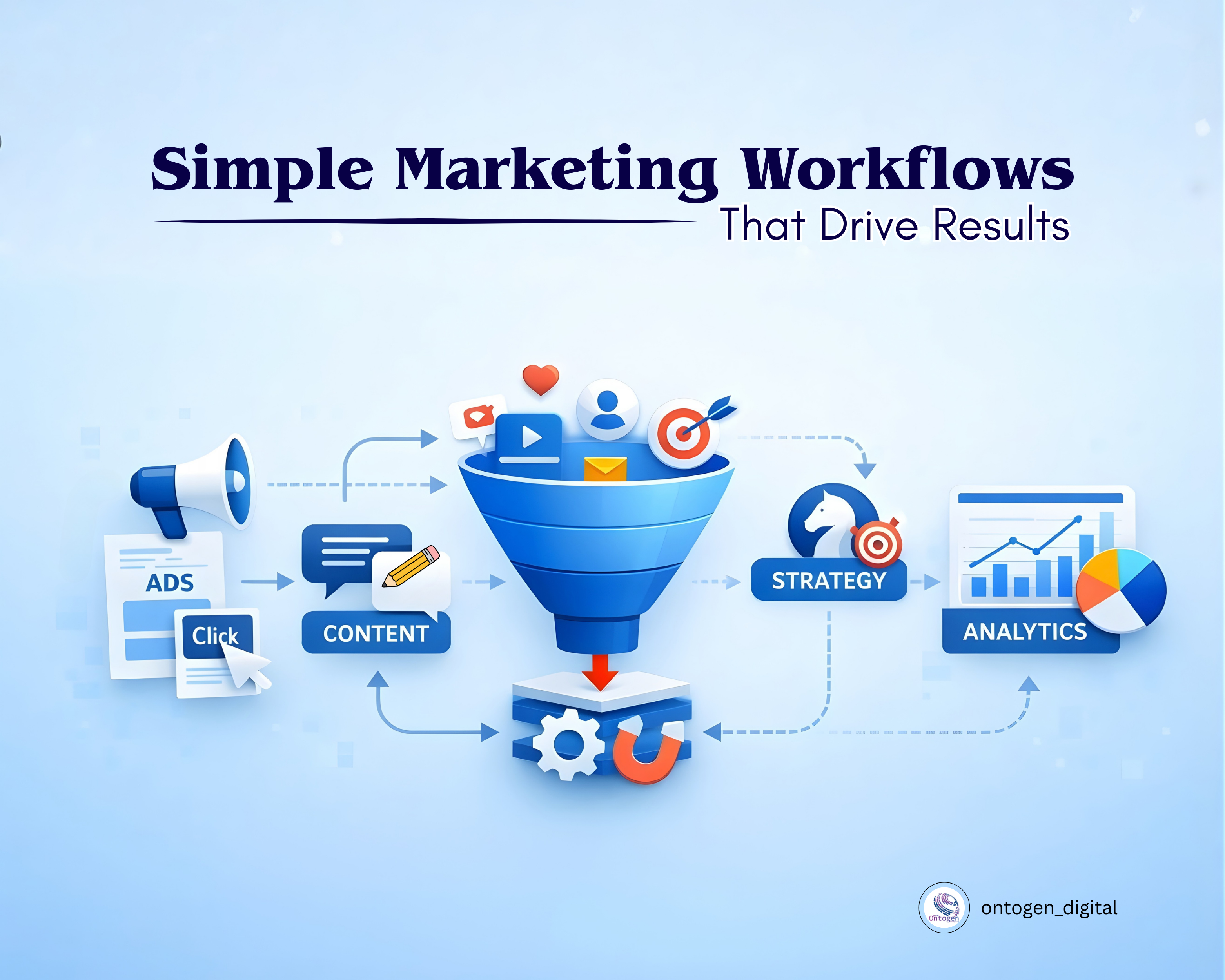
Execution is not “set and forget”.
Campaigns need monitoring, testing, and learning. The first few weeks usually focus on data collection. Patterns begin to appear in audience behavior and creative performance.
A disciplined marketer observes before making major changes. Constant restarts slow learning.
Clear communication during this stage builds trust. Short updates explaining what is being tested reassure clients.
For example, an e-commerce brand in New York might break even in month one, see a small profit in month two, and strong returns in month three. Quitting early would stop momentum.
Consistency compounds results.
Strong execution supported by performance-driven PPC campaigns often separates profitable businesses from struggling ones.
Stage 7: Reporting, Payments, and Retention
Good reporting is clear and honest.
Clients do not need complex dashboards. They want to know if marketing is helping the business grow. Metrics should connect to leads, revenue, and cost efficiency.
Transparency builds trust. Sharing what worked and what needs improvement shows professionalism.
Clear billing systems prevent awkward conversations. Monthly retainers and defined cycles work well.
Retention grows when communication is proactive. Suggesting new ideas before clients ask shows ownership.
Marketing success compounds over time. Businesses that think long-term grow more steadily.
The Human Side of Marketing
Marketing is not just numbers. It is people.
Business owners often feel cautious about spending. Some were burnt before. Some feel overwhelmed by digital choices.
A good marketer guides calmly and educates. When clients understand the process, they become partners instead of sceptics.
Expectation management is a real marketing skill.
How Ontogen Digital Builds Marketing Systems That Last
At Ontogen Digital, marketing is treated as a structured system, not random activity.
We focus on clear onboarding, research-backed strategy, and measured execution. We avoid unrealistic promises and one-size-fits-all packages.
Our work spans SEO services, content marketing, paid advertising, web development, and even CGI animation for brands that want to stand out visually.
Every strategy is tailored to business goals and market conditions. This practical approach helps SMBs grow steadily.
If you explore our blog section, you’ll see we prioritize education, not hype.
Conclusion: Marketing That Doesn’t Break Is Built on Process
Marketing success is rarely about luck. It is about structure, communication, and consistency.
A simple workflow protects time, improves delivery, and builds trust. It creates repeatable success for marketers and predictable growth for businesses.
If your marketing feels chaotic, you probably don’t need more tools. You need a better system.
At Ontogen Digital, we help businesses build simple, reliable marketing systems designed for long-term growth.
If you want structured, full-stack digital marketing support, visit Ontogen Digital and start building a workflow that works.
FAQ
What is a marketing workflow?
A marketing workflow is a step-by-step process that shows how marketing tasks move from planning to execution and reporting. It helps teams stay organized and consistent.
Why is a marketing workflow important?
A workflow prevents confusion, missed deadlines, and poor communication. It ensures marketing efforts are structured and results-focused.
How do I create a simple marketing workflow?
Start with clear stages: onboarding, research, planning, execution, tracking, and reporting. Keep it simple and repeatable.
Do small businesses really need a marketing workflow?
Yes. Even small businesses benefit from structure. A simple workflow helps use time and budget more efficiently.
What is the first step after signing a new marketing client?
Client onboarding. This includes collecting access, understanding goals, and setting expectations.
How long should a marketing onboarding process take?
Usually 3–7 days. Rushing onboarding often leads to mistakes later.
What tools are needed for a marketing workflow?
Basic tools like Google Analytics, a project management tool, and a reporting dashboard are enough to start.
How do marketers track client leads?
Through CRM tools, spreadsheets, or lead tracking software connected to forms and ads.
How often should marketing reports be shared?
Most agencies share reports monthly. Some provide weekly summaries for active campaigns.