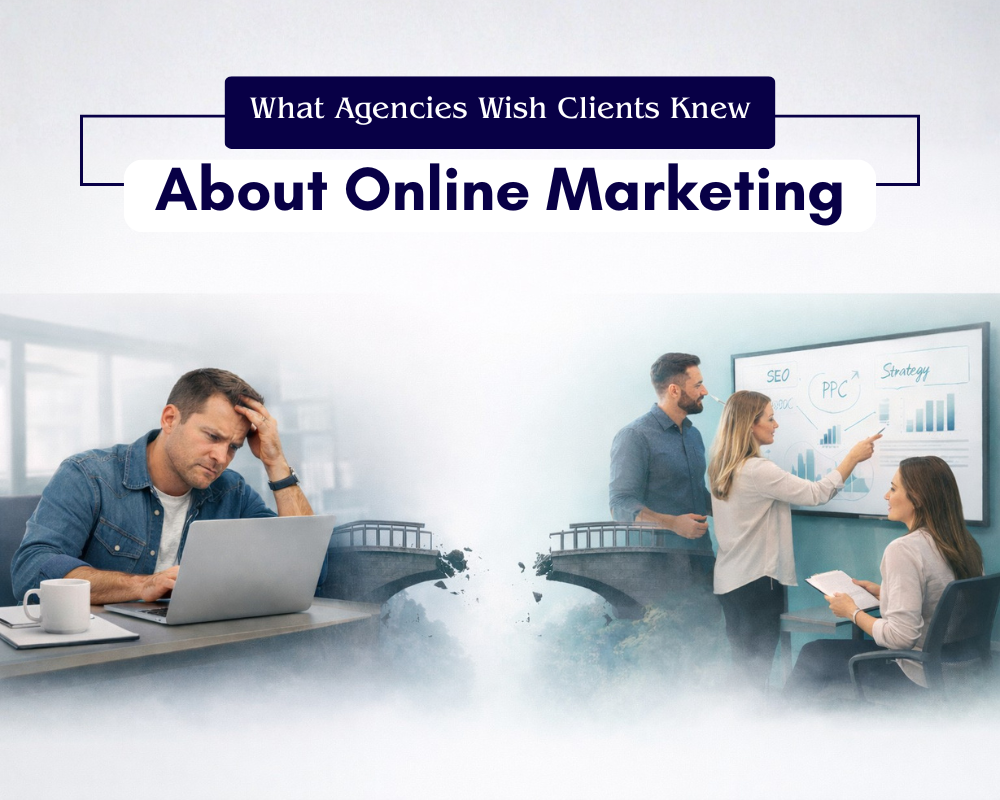
Closing the Expectation Gap
Online marketing has quietly become the central nervous system of modern business growth. For a local café in Pune, a fast-growing e-commerce brand, a B2B startup, or an independent professional, visibility today is largely determined by how effectively a brand shows up on search engines, social platforms, and digital channels. Yet, despite billions being spent on digital advertising and content, many businesses still feel confused, impatient, or dissatisfied with their marketing results.
This frustration rarely comes from a lack of tools. It usually comes from a gap between what clients expect and how a digital marketing agency actually operates. Clients often imagine a straight line from spending money to getting customers. Agencies, on the other hand, know that online marketing is iterative, experimental, and deeply dependent on data, creative quality, timing, and collaboration.
At Ontogen Digital, a full-service social media marketing agency and performance-focused marketing agency, we have worked with startups, local businesses, D2C brands, and service providers. Over time, we have seen the same patterns repeat: unrealistic timelines, misunderstanding of metrics, underestimating the role of strategy, and overvaluing vanity numbers like likes and impressions.
This blog is written as an honest conversation, not a sales pitch. It explains what agencies wish clients truly understood about online marketing before signing a contract. When expectations are aligned, budgets are used better, communication improves, and results become far more predictable.
If you are considering hiring a digital marketing agency, or if you already work with one and feel uncertain about outcomes, this guide is meant to give you clarity, confidence, and a practical framework for success.
Online Marketing Is a System, Not a Switch
Many business owners approach online marketing as if it were a simple on-off mechanism. They assume that once ads are turned on or content is posted, customers will immediately appear. This belief is understandable because traditional advertising often created that illusion: place a newspaper ad and phone calls follow.
Digital marketing works differently. It functions more like a living system made up of interconnected elements: strategy, creative content, audience targeting, website experience, tracking infrastructure, and continuous optimization. If any one of these pieces is weak, overall performance suffers.
Search engine optimization, for example, is not about “doing SEO” for a month and declaring victory. It is about gradually building authority, relevance, and trust in Google’s eyes. That involves technical fixes, consistent publishing, keyword research, and earning credibility through quality content. Results accumulate slowly, but they tend to be durable.
Social media marketing also requires patience. A social media marketing agency cannot manufacture trust overnight. Audiences warm up to brands through repetition, storytelling, and authenticity. A single viral reel might bring visibility, but consistent presence builds real brand equity.
Paid advertising feels faster because traffic can arrive within hours of launching campaigns. However, profitability rarely appears immediately. The first few weeks are usually a learning phase where audiences are tested, creatives are rotated, and landing pages are refined. Smart agencies treat this period as investment in data, not failure.
The most successful clients understand that online marketing is a long-term growth engine. They focus less on day-to-day fluctuations and more on trends over 60 to 90 days. That mindset shift alone often determines whether a campaign succeeds.
Strategy Matters More Than Platforms

A common mistake clients make is starting with platforms instead of goals. They arrive saying, “We need Instagram ads,” or “We want to rank number one on Google,” without defining what success actually looks like for their business.
A strong marketing agency begins every engagement with strategic questions. Who is the ideal customer? What problem does the business solve? What is the average order value? How much can the company realistically spend to acquire a customer? What revenue milestone are they trying to reach in the next year?
These answers shape everything that follows. A local service business might benefit far more from Google Search Ads and local SEO than from flashy Instagram campaigns. Meanwhile, a fashion e-commerce brand may find better returns through Meta ads, influencer collaborations, and retargeting funnels.
The role of a digital marketing agency is not to push the latest trend, but to design a channel mix that aligns with the client’s business model. Platforms are tools; strategy is the blueprint that determines whether those tools create value.
Clients who embrace this approach tend to ask better questions. Instead of “Which platform should we use?” they ask, “What will help us reach our revenue goals most efficiently?” That shift in thinking makes collaboration far more productive.
Read also: Google Ads Beginner Guide: Step-by-Step Setup for High-Performance Campaigns
Why Client Involvement Is a Hidden Growth Lever
Many clients assume that once they hire an agency, they can step back completely and wait for results. In reality, the most successful campaigns are deeply collaborative.
No agency understands a business as intimately as its founder or leadership team. Agencies need access to that knowledge: insights about customers, objections in sales conversations, pricing nuances, and competitive advantages that may not be obvious from the outside.
Problems arise when approvals are delayed, feedback is vague, or internal teams are misaligned. A brilliant campaign can stall simply because creatives sit unapproved for weeks. Similarly, ads may underperform if the offer is unclear or the landing page does not reflect what customers truly want.
Great partnerships feel less like vendor relationships and more like joint problem-solving. Agencies bring marketing expertise; clients bring business context. When both sides communicate openly, results compound far faster.
Data, Not Opinions, Drives Decisions
Modern online marketing is built on data. Every meaningful decision from budget allocation to creative direction can be measured and tested.
Agencies rely on analytics platforms to track how users behave on websites, which ads generate leads, and where people drop off in the funnel. Heatmaps reveal whether visitors scroll or bounce. Conversion tracking shows whether clicks turn into revenue.
This is why testing is so central to professional marketing. Agencies routinely experiment with headlines, visuals, audiences, and offers. The goal is not perfection on day one but continuous improvement over time.
Clients sometimes mistake this experimentation for uncertainty. In reality, it is the hallmark of a serious digital marketing agency. The best agencies document what they test, explain what they learn, and adjust strategy accordingly.
Read also: 13 Steps to Write SEO-Friendly Blog Posts to Rank on Google in 2025
Why Cheap Marketing Often Becomes Expensive
Budget is always a sensitive topic. Every business wants strong results at a reasonable cost. However, aggressively low budgets frequently create a false economy.
Low fees often mean fewer experienced strategists, weaker creative work, and limited testing. Poor creatives lead to higher ad costs. Weak strategy wastes spend. In the end, the business may pay less in agency fees but lose far more in ineffective advertising.
Smart companies treat marketing as an investment in growth, not a monthly expense to minimize. They evaluate success by return on investment rather than sticker price. This mindset allows agencies to focus on quality rather than shortcuts.
Virality Is Not a Business Model
Many brands chase virality, hoping that one big moment will transform their business. While viral content can be exciting, it is rarely a reliable revenue engine.
A video that racks up millions of views does not automatically create customers. Sustainable growth comes from consistent visibility, clear messaging, and a structured funnel that guides people from awareness to purchase.
A responsible social media marketing agency prioritizes outcomes: leads, sales, and lifetime value over vanity metrics like follower counts or impressions.
What Realistic Client Expectations Look Like (The 90-Day Journey)
In the first 90 days of working with a digital marketing agency, the focus typically evolves from foundation to optimization.
The initial weeks are spent understanding the business, auditing existing assets, and setting up tracking. Agencies review websites, analyze competitors, and clarify goals. This phase is critical because poor foundations create poor results later.
The middle phase centers on execution. Campaigns are launched, content calendars are implemented, and early tests begin. Some initiatives perform well; others do not. That is normal.
By the final month, patterns start to emerge. Agencies double down on what works, refine what is close, and pause what consistently underperforms. Reporting becomes clearer, and forecasts more reliable.
Clients who commit to this timeline almost always see better outcomes than those who demand instant wins.
Reporting Myths and How to Read Marketing Results
Marketing reports can feel overwhelming. Many clients assume that more clicks equal success or that daily reports provide better control. Neither belief is accurate.
Clicks matter only when they lead to meaningful actions like leads or sales. Similarly, daily fluctuations often create noise rather than insight. Weekly summaries and monthly deep dives tend to be far more useful.
A strong report should include context, not just numbers. Agencies should explain what changed, why it mattered, and what they plan to do next. Metrics like cost per lead, cost per acquisition, and return on ad spend are far more important than raw impressions.
Transparency builds trust. The best agencies openly discuss challenges, propose solutions, and invite collaboration rather than hiding behind dashboards.
Understanding Real ROI in Online Marketing
Return on investment is not just about immediate sales; it is also about long-term value. Paid campaigns may generate revenue quickly, while SEO builds compounding traffic over time.
A simple way to think about ROI (Return on investment) is to compare total marketing cost including agency fees and ad spend with revenue directly influenced by marketing. If a business spends ₹80,000 in a month and generates ₹1,00,000 in attributable revenue, the campaign has produced a positive return.
However, this picture is incomplete without considering lifetime value. A customer acquired today may buy repeatedly over years, making the initial marketing investment far more valuable.
Savvy businesses track both short-term and long-term impact when evaluating performance.
A Real-World Local Business Example
Consider a small bakery in Pune that partnered with a marketing agency to increase walk-ins and online orders. With a modest monthly budget, the strategy focused on local SEO, Google Ads, and engaging Instagram content.
Over three months, the bakery’s visibility in local searches improved significantly. More customers discovered the brand online before visiting in person. Online pre-orders also increased, creating predictable revenue.
Even with limited spend, the business saw clear growth because the approach was targeted, consistent, and aligned with customer behavior.
A D2C Brand Scaling Story
A direct-to-consumer apparel brand worked with an agency to scale sales during a seasonal launch. The strategy combined Meta advertising, influencer content, and email marketing.
Initial campaigns focused on finding the right audience and refining creative messaging. As performance improved, budgets were gradually increased. Retargeting efforts delivered particularly strong returns.
The lesson was simple: scaling profitably requires patience, testing, and high-quality creative work.
Frameworks That Guide Smart Marketing
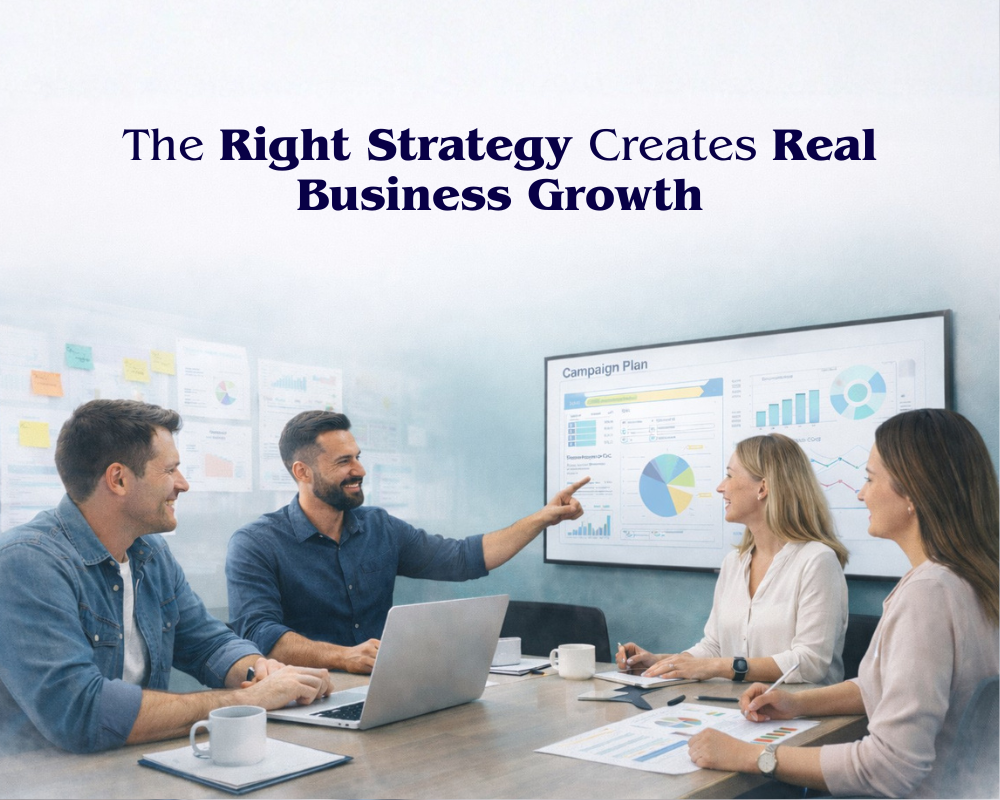
Many agencies rely on strategic frameworks to maintain clarity. SOSTAC helps structure planning from situation analysis to execution and measurement. The RACE model ensures brands nurture customers from awareness to loyalty.
Another useful tool is the Audience–Message–Channel framework, which keeps campaigns focused on the right people with the right story in the right place.
These frameworks reduce guesswork and create shared language between clients and agencies.
Why Creative Quality Matters More Than Ever
In crowded digital spaces, creative work often determines success more than budget. Strong visuals, compelling copy, and clear messaging dramatically improve engagement and conversion rates.
Investing in quality creative may seem expensive upfront, but it frequently lowers advertising costs over time by improving performance.
Contracts, Pricing, and Clear Boundaries
Marketing partnerships work best when expectations are clearly documented. Common pricing models include monthly retainers, project-based engagements, performance-based agreements, or hybrids.
Clients should clarify deliverables, reporting cadence, asset ownership, and termination terms before signing any contract. Transparency prevents misunderstandings later.
How Ontogen Digital Supports Growth
Ontogen Digital operates as more than just a marketing vendor; we act as a growth partner.
Our SEO Services help businesses build sustainable organic visibility. Our PPC Campaigns focus on measurable lead and sales generation. Through Web Development Services, we create conversion-optimized websites that support marketing goals.
Our Content Marketing Services strengthen authority and trust, while CGI Animation brings products and stories to life visually. Finally, our Customized Marketing Strategies ensure every plan is tailored to the client’s stage and ambitions.
You can explore our work further on the Ontogen Digital homepage or browse insights on the Ontogen Blog.
Read also: Check our Web Development Services
FAQs
How long does online marketing take?
Most meaningful results appear within 90 days, though SEO typically requires longer.
Is social media enough?
No. It works best when combined with search, ads, and a strong website.
How should I choose an agency?
Look for transparency, relevant case studies, and realistic promises.
What budget do I need?
Enough to generate meaningful data and learning.
Can small businesses compete online?
Yes, smart targeting often beats big budgets.
Conclusion
Online marketing succeeds when clients and agencies work as partners rather than strangers. Clear goals, realistic timelines, and open communication create the conditions for real growth.
If you are looking for a transparent, results-driven digital marketing agency, Ontogen Digital is ready to collaborate.
Visit the Ontogen Digital or contact us today to start building a customized online marketing strategy that works for your business.