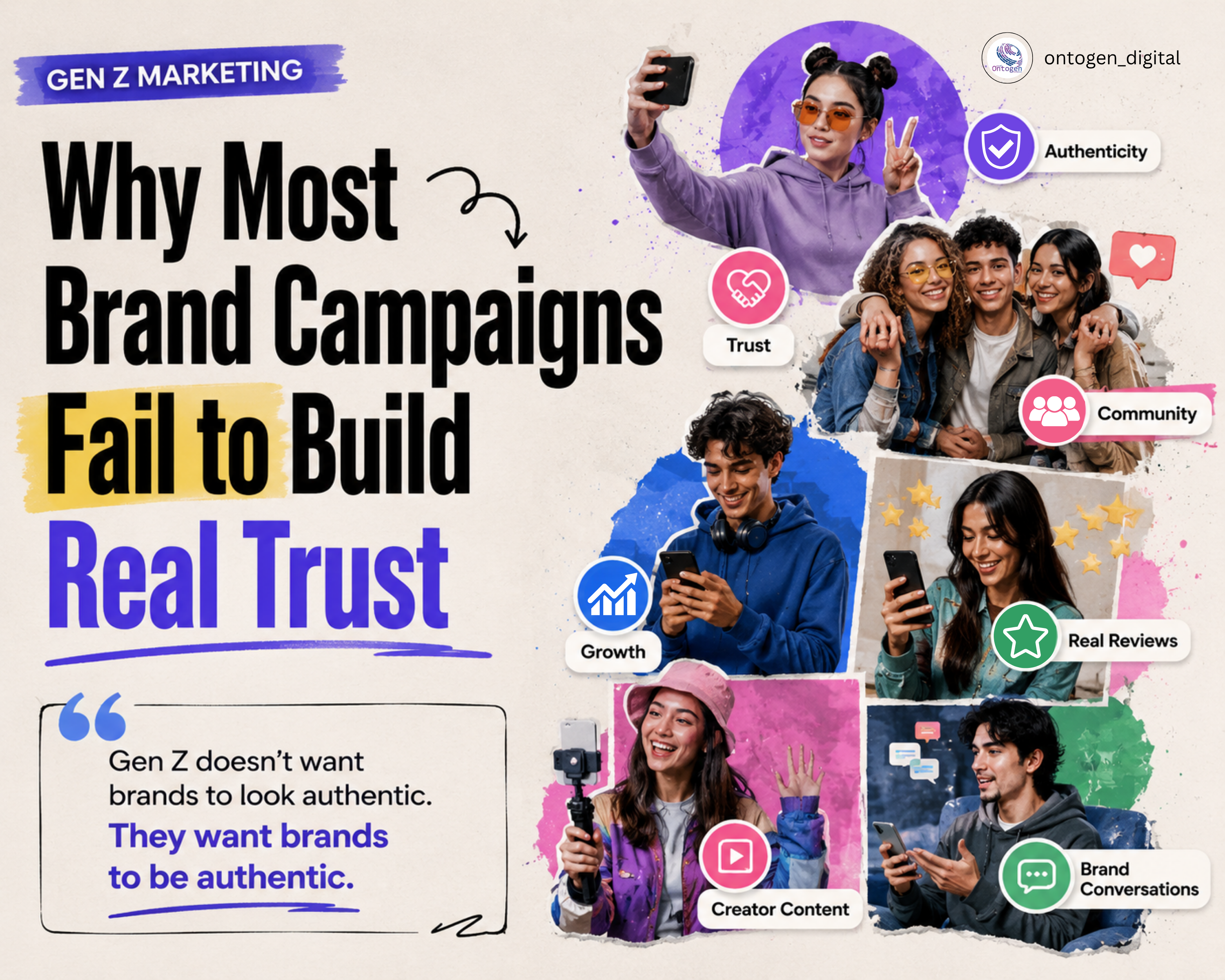
Quick Summary
Your marketing team and your Gen Z customers are looking at the same campaign and seeing two different things.
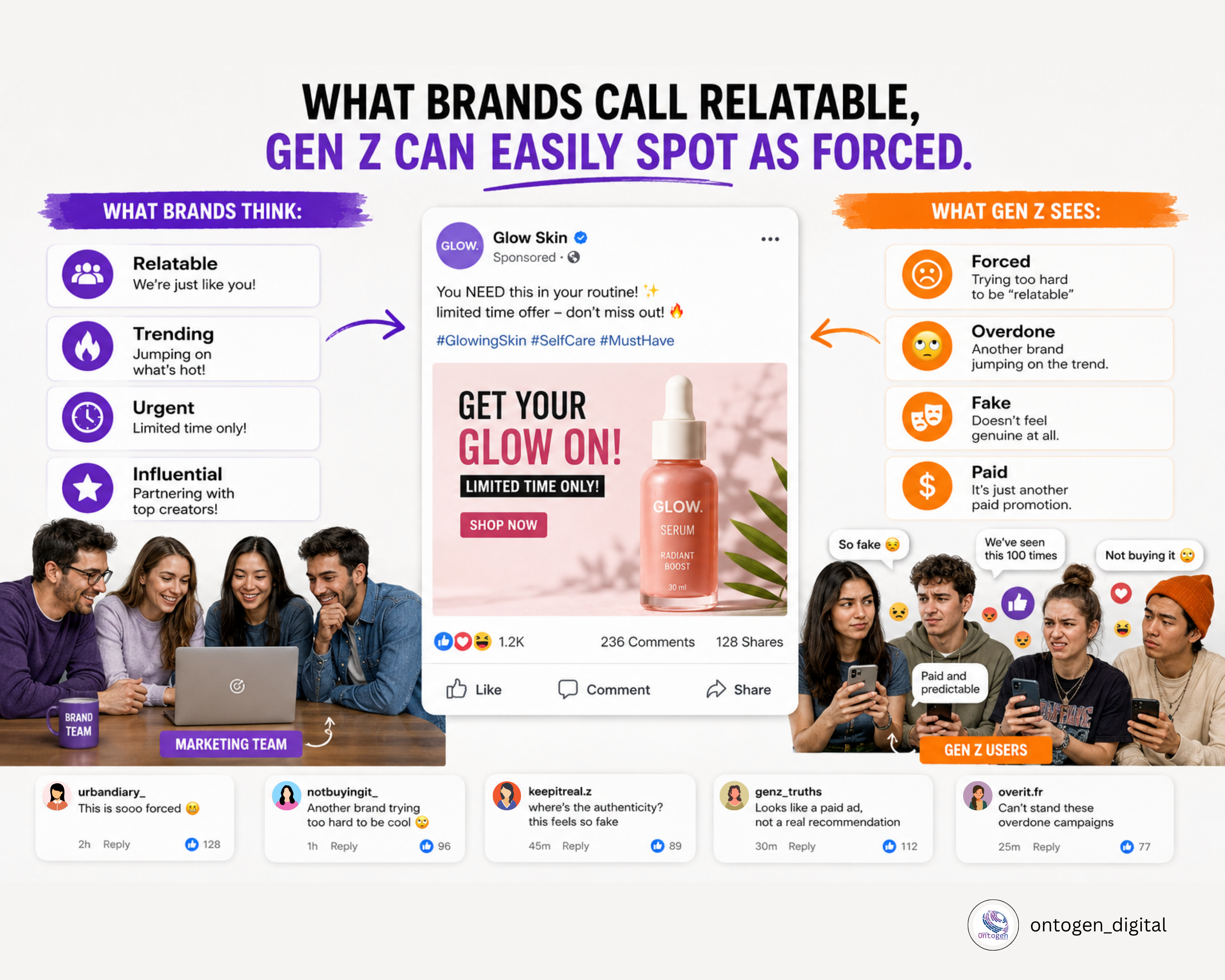
What your team calls relatable, Gen Z calls forced. What your team calls urgency, Gen Z calls a red flag. While most brands are still investing in polished campaigns and celebrity faces, Gen Z is asking one question: is this real?
This isn't about learning slang or chasing every trend. It's about understanding how this generation actually decides what to buy, why old playbooks backfire, and what to do instead.
Introduction
Marketing to Gen Z has quietly become one of the hardest problems in the industry.
Every generation before them grew up with marketing happening around them. Gen Z grew up with marketing happening at them, nonstop, from the moment they could hold a phone. By the time they have real buying power, they've already scrolled past thousands of ads, sponsored posts, and "authentic" brand videos.
That history changes how they respond to a pitch. Most brands still reach for the same three moves: trending slang, a viral sound, or a celebrity collab. None of that is the real fix.
The actual problem is structural. Most marketing teams are still running a process built for a version of the internet that no longer exists, one where the brand controlled the message, and the customer had no easy way to verify its accuracy.
That world is gone. Today's consumer doesn't just consume marketing. They investigate it.
Why This Topic Matters Today
Gen Z now holds serious spending power, and that power is only growing as more of them enter the workforce. But they're also the most ad-sceptical generation on record, having grown up with smartphones, YouTube, Instagram, TikTok, and AI-powered search for their entire lives.
The numbers make the shift hard to ignore. According to Morning Consult's Influencer Report, the share of Gen Z and Millennials who say they trust social media influencers "a lot" or "somewhat" climbed 10 percentage points in just four years, from 51% in 2019 to 61% in 2023. The same research found something even more telling for how brands should show up: when asked what matters most in an influencer, 58% of young people pointed to authenticity, while only 10% said a large following mattered more.
Before buying anything, they check Google Reviews, Reddit threads, TikTok reviews, YouTube breakdowns, and the comments section. A brand's ad is no longer the final word. It's just the opening pitch, and the audience fact-checks it before deciding whether to believe it.
For any brand trying to grow in 2026, this isn't a "nice to understand" trend. It directly decides whether your marketing budget converts or gets ignored.
Where Marketing Teams and Gen Z Disagree
Trending Slang and Behind-the-Scenes Content
Explanation: Marketing teams believe using trending slang or posting "behind-the-scenes" content makes a brand feel relatable. Gen Z reads it differently. If the slang feels bolted on, or the behind-the-scenes clip feels scripted, it reads as a performance, not a personality.
Example: McDonald's own PR team once described a new dessert as a "refreshing combination of creamy soft-serve and indulgent mango sweetness, thoughtfully crafted to offer the perfect fix for hot summer days." The brand's Gen Z social team ran the same launch with a two-word caption: "This healed me." The second version is the one that actually sounds like a customer talking, not a press release, and it's the version that spread.
The same split shows up across categories. A beverage brand's Gen Z copy for a new drink line read simply "Hydration szn is here and she is thriving," next to a millennial version stacked with phrases like "real ingredients, thoughtfully crafted." A sports team selling season tickets swapped a paragraph of "delivers unbeatable value across every fixture" copy for one line: "this ticket literally said 'what if we just included everything.'" In every case, the shorter, plainer line is the one built to be screenshotted and shared.
Business Impact: Forced authenticity doesn't just fail to convert, it actively damages credibility. Once an audience tags a brand as "trying too hard," that skepticism carries over to future campaigns too. Morning Consult's research on what young people actually value backs this up: authenticity outranks reach by nearly 6 to 1 (58% vs. 10%) when Gen Z and Millennials describe what makes them trust a voice online.
Urgency Tactics and Fake Scarcity
Explanation: Countdown timers and "only 3 left" banners are built to create urgency. Gen Z has seen this tactic enough times to recognise it as manufactured pressure rather than real scarcity, and it erodes trust instead of building it.
Example: This isn't just a trust problem anymore, it's a legal one. Fashion retailer Boohoo was sued by customers who alleged its "original prices" and countdown-driven discounts were fabricated, and settled the case for close to $200 million. Hot Topic faced a similar claim over misleading "was/now" pricing and paid $12.5 million to settle. Both cases started the same way: shoppers noticed a timer that reset or a "sale" that never actually ended, screenshotted it, and shared it as proof the brand was lying.
Business Impact: Fake urgency can produce a short-term click, but it costs long-term trust, and in a growing number of cases, real money. Once a shopper catches the trick, they assume every other claim on the site is exaggerated too, and increasingly, regulators and courts are catching it as well.
Big Influencers vs. Real Users
Explanation: Marketing teams often assume a bigger following means a bigger return. Gen Z trusts a smaller creator who genuinely uses the product far more than a celebrity who was clearly paid to hold it.
Example: UK grocery chain Iceland is the clearest case study here. As reported by Econsultancy, Iceland pulled its TV ads featuring celebrities after its own CEO, Malcolm Walker, called the brand's association with celebrity endorsers "brand damaging." The company switched strategy entirely, partnering with everyday parents through the YouTube community Channel Mum instead. Industry case studies tracking the campaign's results report brand approval jumping from 10% to 70%, with video retention holding above 55% on Facebook and nearly 60% on YouTube. Iceland liked the results enough to run a second micro-influencer campaign the following year.
Business Impact: Follower count is a vanity metric. Trust is the metric that actually moves revenue. Morning Consult's finding that 58% of young people value authenticity over reach, against just 10% who prioritize follower count, is the same math Iceland's own CEO acted on when he called celebrity partnerships damaging to the brand.
Private Support vs. Public Accountability
Explanation: Teams often move complaints to DMs to "handle it quietly." Gen Z sees a public complaint as a test: will the brand own it in front of everyone, or hide it?
Example: Wendy's built its entire modern brand voice around answering criticism in public rather than sliding into DMs, including replying directly and often self-deprecatingly to complaints on its main feed instead of quietly resolving them behind the scenes. That willingness to be seen handling friction, rather than hiding it, is a big part of why the brand consistently gets cited as one of the more trusted, "human" voices among Gen Z-facing companies.
Business Impact: How a brand handles criticism in public often becomes more persuasive than the original ad. Hiding complaints can quietly damage a brand's reputation more than the complaint itself ever would.
The Trust-First Marketing Framework
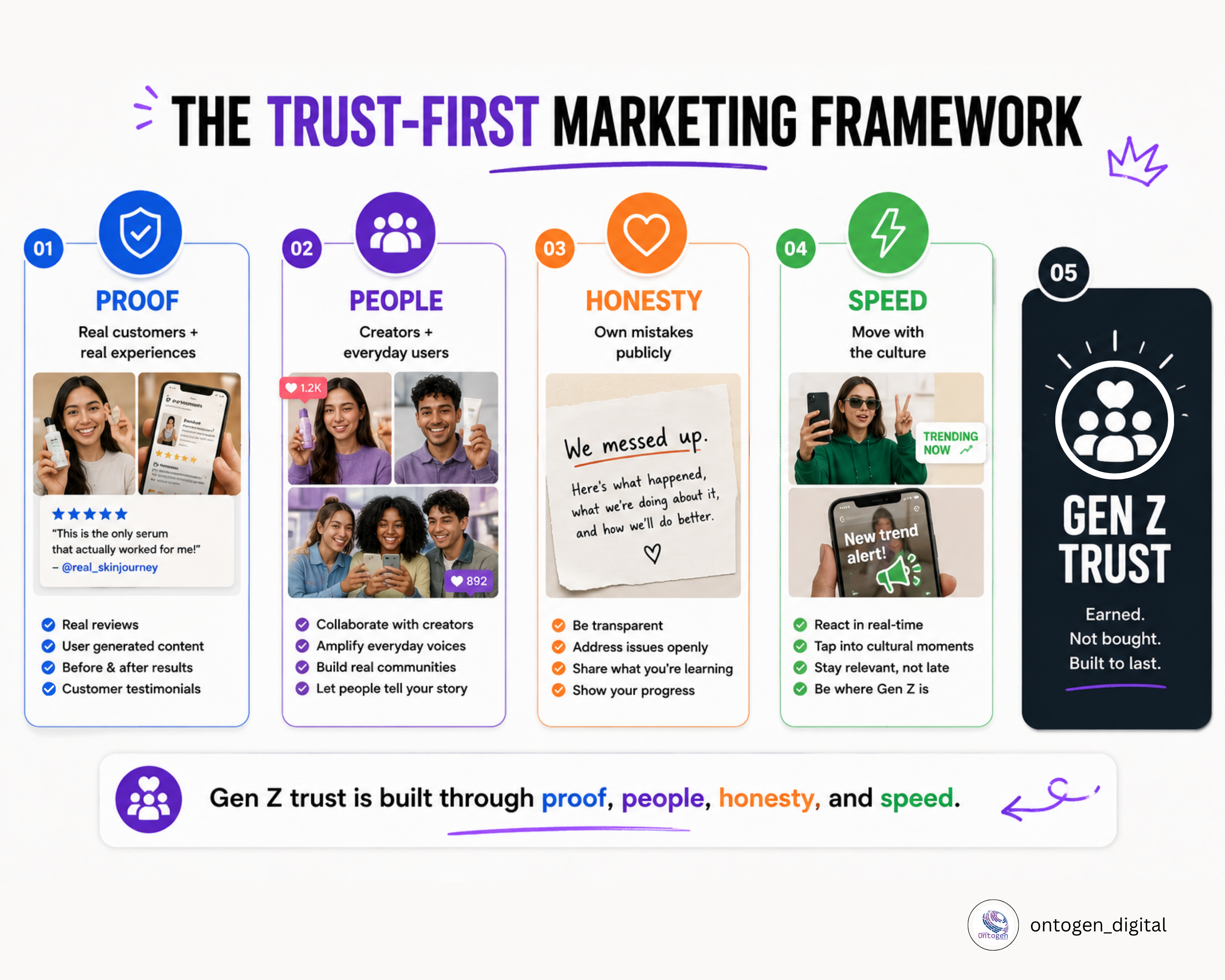
Building campaigns Gen Z actually responds to comes down to four elements working together:
Proof – Real customers, real testimonials, and real product experiences shown without heavy polish. This is the evidence that backs up any claim your brand makes.
People – Micro-influencers and everyday users who already have real, earned trust with their audience. This is who delivers the message so it doesn't sound like an ad.
Honesty – Owning mistakes publicly instead of burying them. This is what turns a slip-up into a trust-building moment instead of a scandal.
Speed – Moving at the pace of the internet instead of the pace of an approval chain. This is what keeps your content relevant instead of a week too late.
When even one of these elements is missing, a campaign tends to feel hollow, and Gen Z notices exactly which one is missing.
It's worth noting these two speeds aren't always in conflict. Food delivery brand Zomato runs both at once: quick, witty, top-of-funnel Instagram captions built to earn attention and get shared, alongside a detailed, review-heavy in-app listing built to answer questions and close the order. The witty post doesn't have to do the selling; it just has to earn the look. The proof does the rest.
Common Mistakes Brands Make
Mistake 1: Prioritizing internal approval over authenticity. Campaigns get rewritten to satisfy stakeholders instead of the audience. A message that survives five rounds of "make it sound more premium" usually ends up reading like a press release.
Mistake 2: Over-polishing every piece of content. Perfect lighting, perfect scripts, and perfect edits often read as fake. A slightly rough, real clip consistently outperforms a flawless studio ad with this audience.
Mistake 3: Treating every trend as mandatory. Not every trend deserves a brand's attention, especially if the approval process is too slow to catch it in time. Jumping on a dead trend reads as out of touch, not current.
Conclusion
Brands aren't failing because they misunderstand Gen Z. They're failing because they're still running strategies that worked five years ago.
Gen Z doesn't reward loudness. They reward honesty.
Key Takeaways
- Gen Z investigates before they trust, so your marketing needs to hold up under research
- Authenticity beats polish: young people rank authenticity over follower count by nearly 6 to 1 (Morning Consult)
- Micro-creators with real trust outperform big names with big followings, as Iceland's 10% to 70% approval jump shows
- Public honesty about mistakes builds more credibility than silence
- Speed matters more than perfection when it comes to trends
- Fake urgency isn't just a trust risk anymore, it's a legal one, as Boohoo and Hot Topic's settlements show
At Ontogen Digital, we help brands move past outdated playbooks and build strategies rooted in trust, community, and storytelling that actually feels real, not rehearsed.
Ready to build a brand Gen Z actually trusts? Visit www.ontogendigital.com to get started.
Frequently Asked Questions
Why doesn't Gen Z trust traditional advertising?
Because they have unlimited access to reviews, creator opinions, and real customer experiences. They verify before they believe.
Can brands actually market to Gen Z authentically?
Yes. Authenticity comes from real experiences, honest communication, and consistent action, not trending slang or memes.
Are influencers still worth it for reaching Gen Z?
Yes, but credibility beats follower count. Micro-influencers consistently outperform celebrities on trust and engagement with this audience, as Iceland's frozen-food campaign showed when it swapped celebrity ads for 50 micro-influencers.
Should brands jump on every viral trend?
No. A late, outdated trend hurts more than it helps. If the approval process can't move fast enough, original content usually performs better than a delayed trend.
How should a brand handle criticism from Gen Z customers?
Publicly and honestly. Responding openly to complaints, rather than moving them to private messages, builds more trust than it costs.
What role does community play in Gen Z marketing?
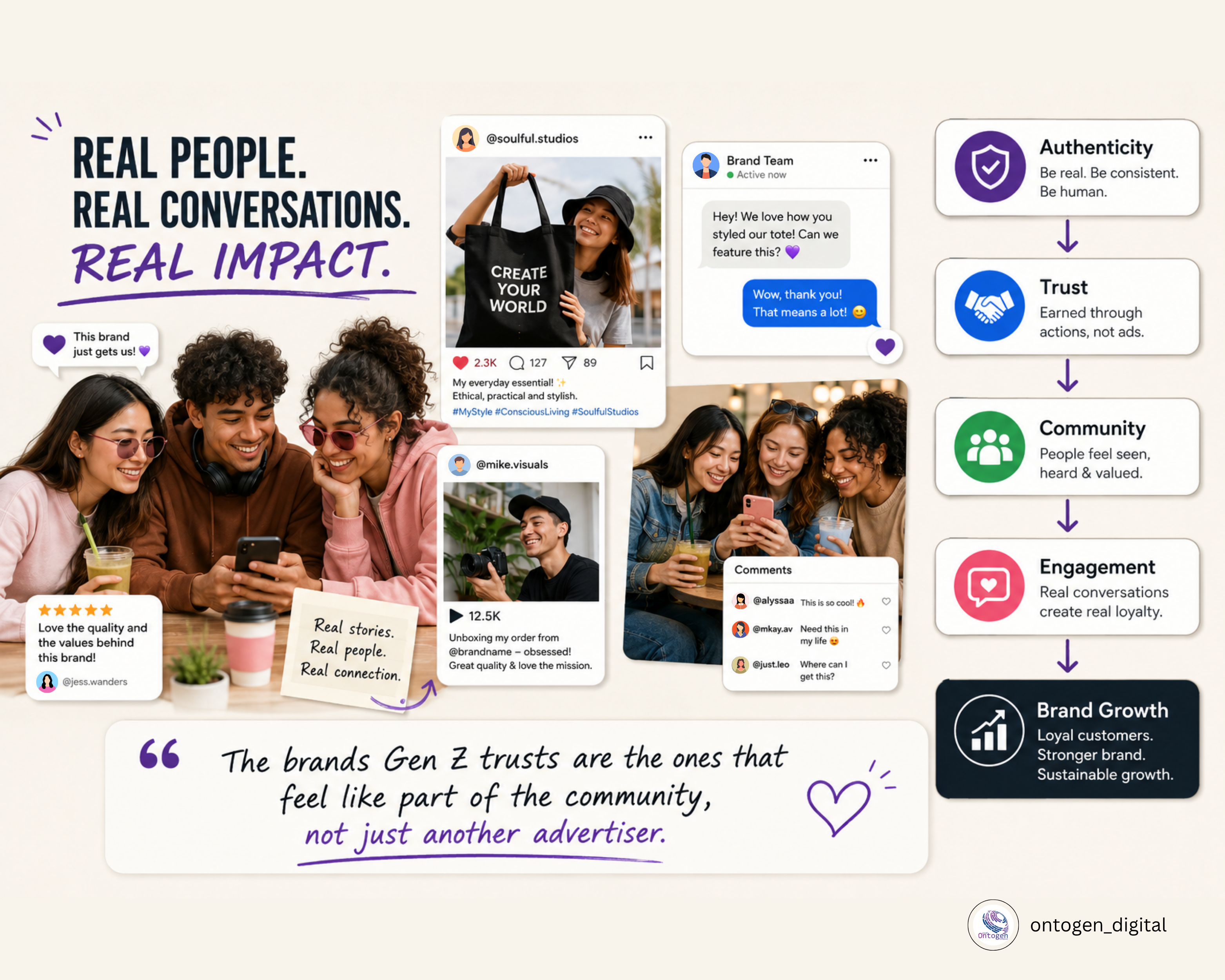
A significant one. Replying to comments, answering questions publicly, and encouraging user-generated content turns customers into advocates rather than just an audience.
Is polished, high-production content a mistake?
Not always, but it needs to be balanced with raw, real content. Overly polished campaigns can read as inauthentic if they aren't backed by genuine proof and honest communication.