Introduction
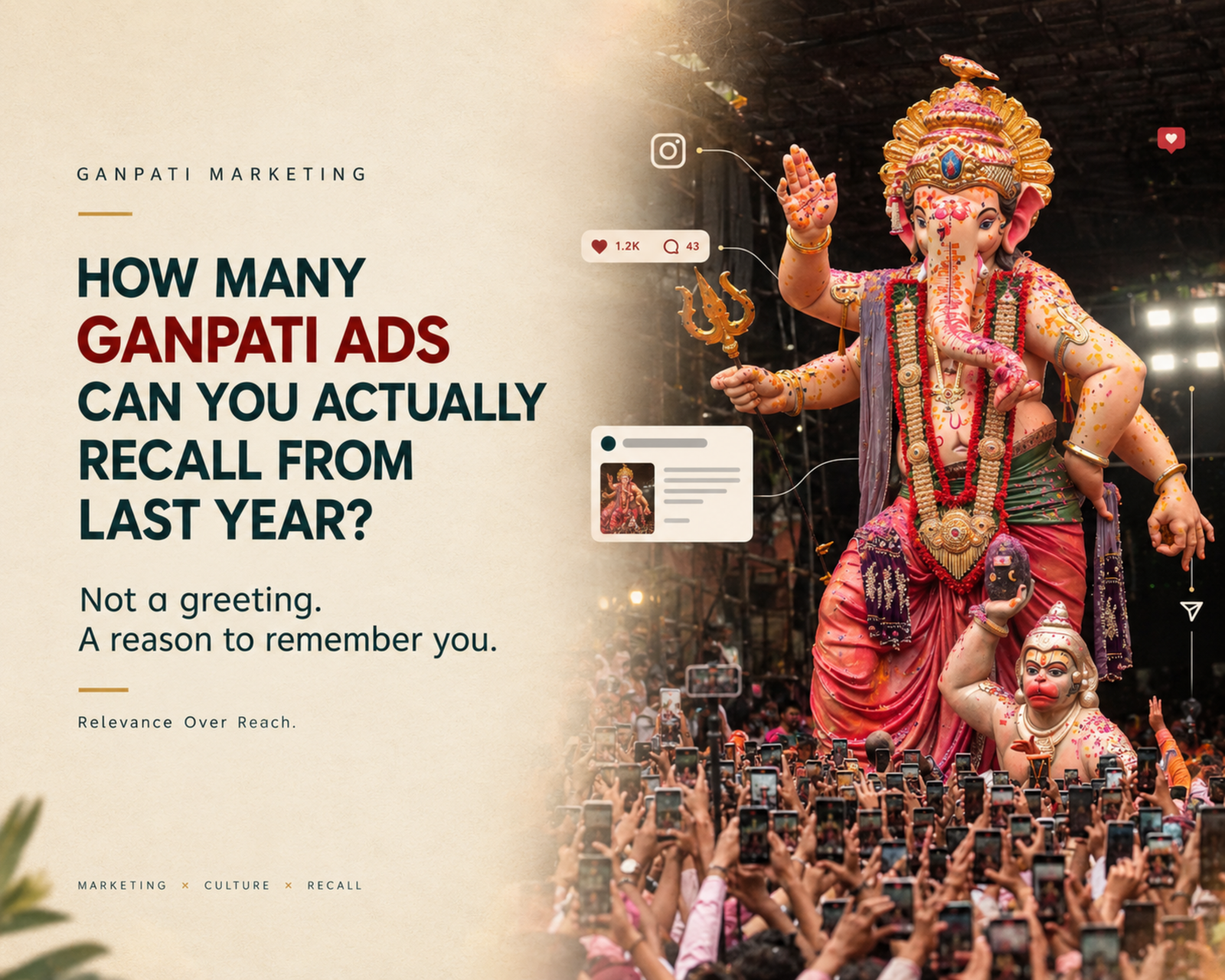
How many Ganpati campaigns can you remember from last year?
Most people can name only a few, even though almost every brand posted something.
Ganesh Chaturthi is a big moment for marketing. People shop for food, gifts, and home decor. They travel, visit pandals, and share their celebrations on social media and WhatsApp. Brands can see all of this, so they all show up at once.
The result is a feed full of Ganesha illustrations, animated greetings, and product photos with a festive border. Each brand says roughly the same thing, and people scroll past.
Greetings are not wrong. The problem is that a greeting gives people no reason to remember your brand.
The campaigns people do talk about tend to be things like a modak kit that got a family cooking together, or a fan that made a long darshan queue easier to bear. Others let devotees make a personal offering online, or turned a grain of wheat into a piece of art.
Those brands did more than wish people a happy festival. They played a part in it. That is what good Ganpati marketing is about.
Why Ganpati Marketing Matters
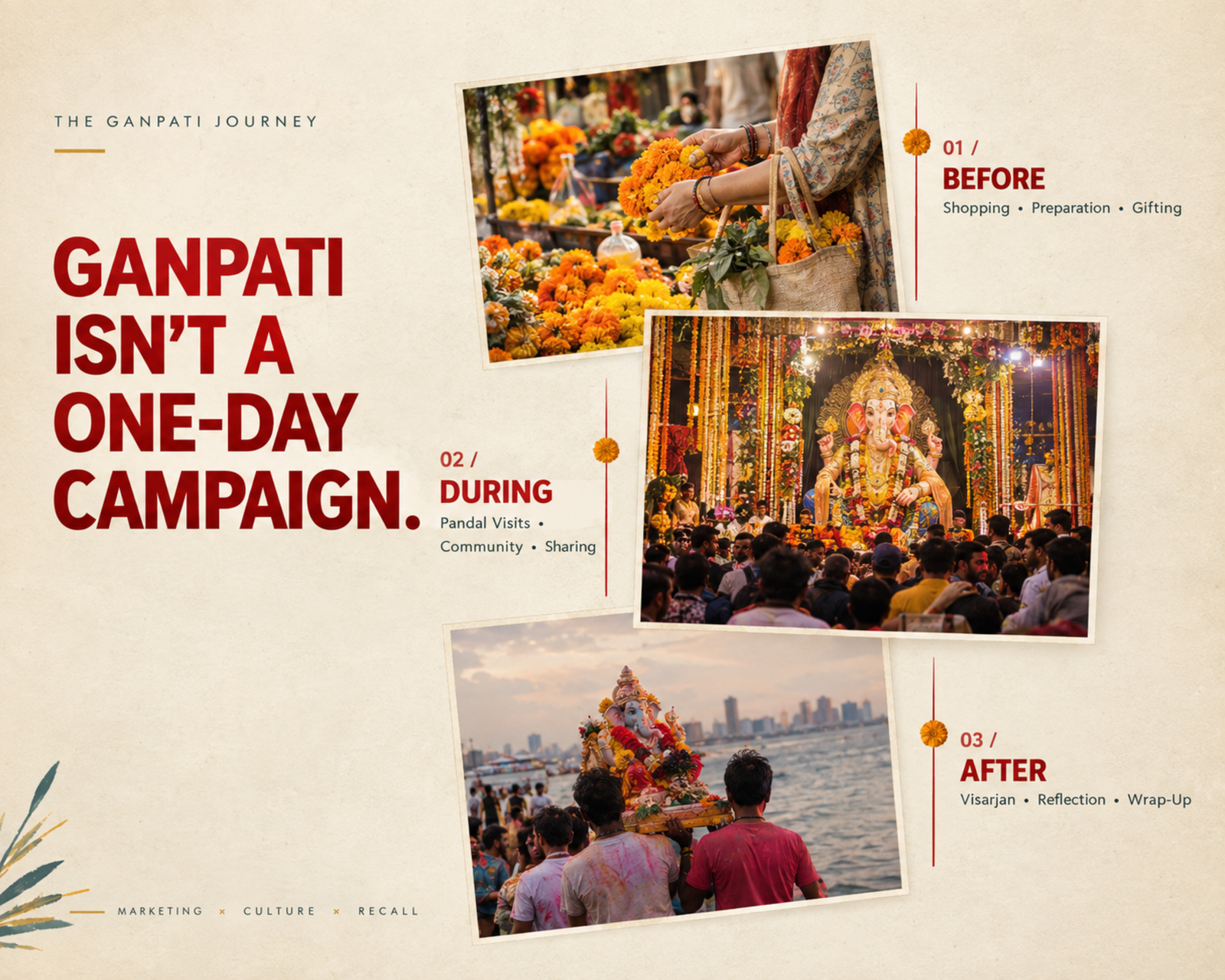
Ganesh Chaturthi is not a one-day event. It runs for days, and people's needs change at every stage.
Before the festival, people clean and decorate their homes, buy ingredients, and choose gifts. During it, families cook together, visit pandals, and wait in queues for darshan. Communities organise events, and everyone shares photos. At the end comes visarjan.
Each stage has its own need, and a brand can step in at any of them. You could:
- Make festive preparation easier
- Solve a problem at a crowded celebration
- Launch a limited-edition product
- Give people something to take part in
- Support a community initiative
- Give customers a reason to come back
So the question changes. Instead of asking, "How do we advertise during Ganpati?", ask, "How can our brand add something to Ganpati?"
5 Ganpati Marketing Approaches That Go Beyond Greetings
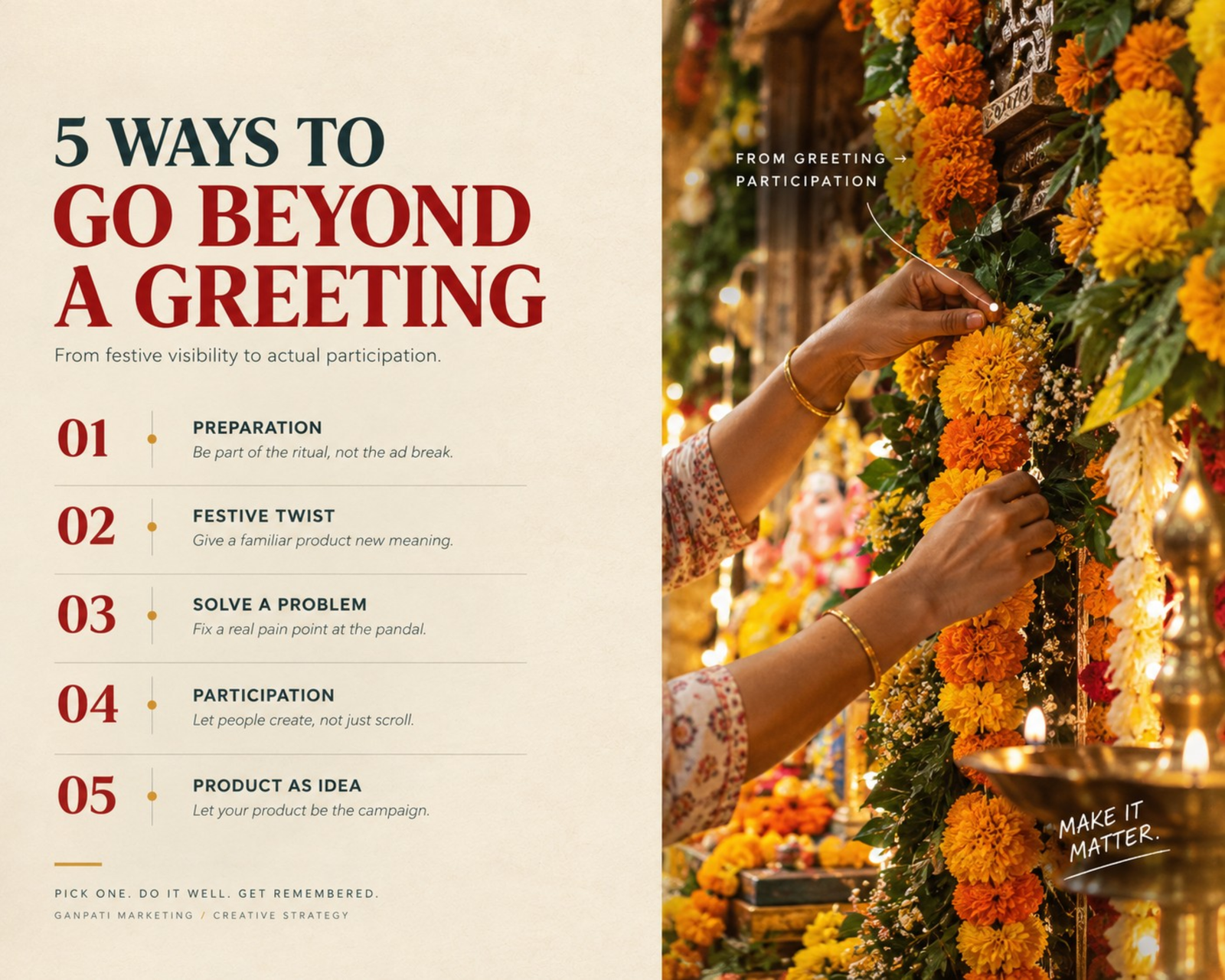
1. Make preparation part of the brand experience.
Some of the best moments of Ganpati happen before the festival starts. Families clean the house, buy ingredients, make modaks, and pick gifts. Children get involved too.
A brand can join in by making these tasks easier or more fun, without interrupting them with an ad.
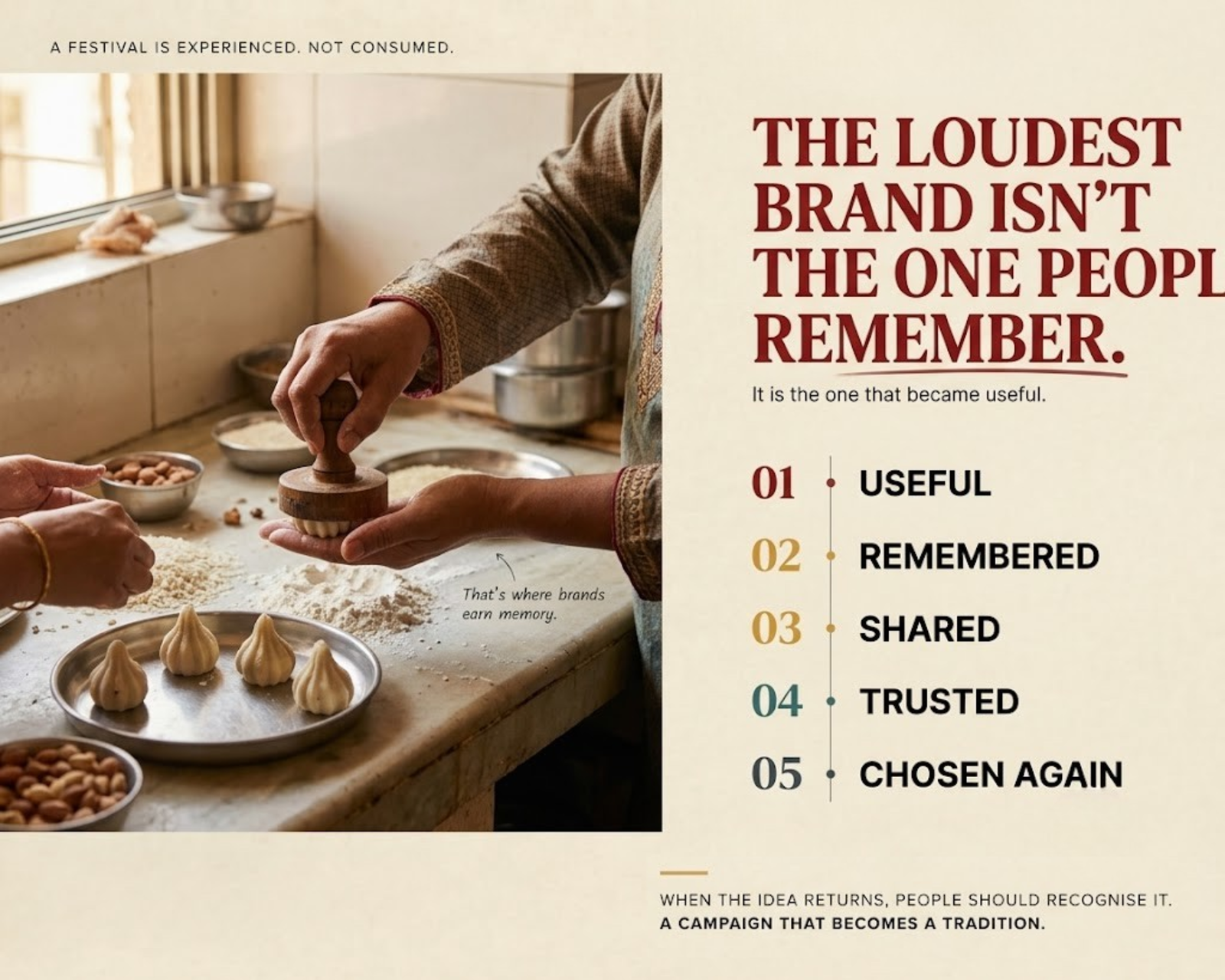
Sweet Karam Coffee did this with its DIY Modakam Kit. The kit gives families the ingredients and tools to make modaks at home. The brand takes care of the sourcing, and the family gets the fun part.
That turns a purchase into an activity. A child shaping a slightly crooked modak, or parents helping in the kitchen, becomes the memory people link to the product.
When your product becomes part of the experience, your brand can become part of the memory.
2. Give a familiar product a festive twist.
You can also take something people already know and present it in a festive form.
Britannia Bourbon teamed up with Bombay Sweet Shop to make a Bourbon Chocolate Modak. It had a chocolate peda, crushed Bourbon biscuit, a ganache centre, and an edible gold finish. It mixed a well-known biscuit with a traditional sweet, and people understood the idea straight away.
Collaborations like this can bring:
- Curiosity about the product
- Trials from new customers
- Social media sharing
- Limited-edition appeal
- Discovery across categories
The lesson is that a festive collaboration needs a clear reason to exist. When the link between the brand, the product, and the festival is obvious, the campaign hardly needs explaining.
3. Solve a real problem at the pandal
Festivals are joyful, but they are also tiring. Queues are long, the weather is hot, crowds are thick, and phones run out of charge.
Brands that fix these small problems earn real goodwill.
Signify's EcoLink placed fans across the Lalbaugcha Raja pandal and its queue areas for the ten days of the festival. In 2025, Polycab ran a similar on-ground effort with comfort areas, charging points, and safety watchtowers.
In both cases, the brand's presence matched a real need. Nobody standing in a long, warm queue has to be told that a fan helps. They feel it, and the product proves its own value.
The best experiential marketing often starts with a real problem.
4. Give people a reason to take part.
People remember what they helped create. That is why participation often works better than a video people simply watch.
Pulse's "Pulse Se Arpan, Bappa Ko Samarpan" campaign let devotees create a personal digital offering. It included a bell and a Mushak that carried the offering to Bappa. The campaign also had plantable seed-paper cards and personalised WhatsApp greetings.
When people take part, brands usually see:
- More engagement
- More sharing
- More time spent with the brand
- More user-generated content
- A stronger personal connection
Someone who only sees your campaign is a viewer. Someone who takes part becomes part of it.
5. Let the product be the big idea
Some strong campaigns start with the most ordinary thing. Instead of asking, "How do we fit our brand into Ganpati?", ask, "What do we already have that could become the idea?"
In 2025, Aashirvaad showed Ganesha engraved on single wheat grains. For an atta brand, wheat is the core ingredient, so it never felt forced. The product itself became the art.
Instamart took a different route. It built an eight-foot Ganpati at Inorbit Mall using more than 400 puja items. Everyday products turned into a striking visual.
Ideas like these can earn press coverage, social content, brand recall, and shareable visuals, without pushing a product into a festive story where it doesn't belong.
Your most powerful festive idea may already be inside your product.
A Simple Framework for Ganpati Campaigns
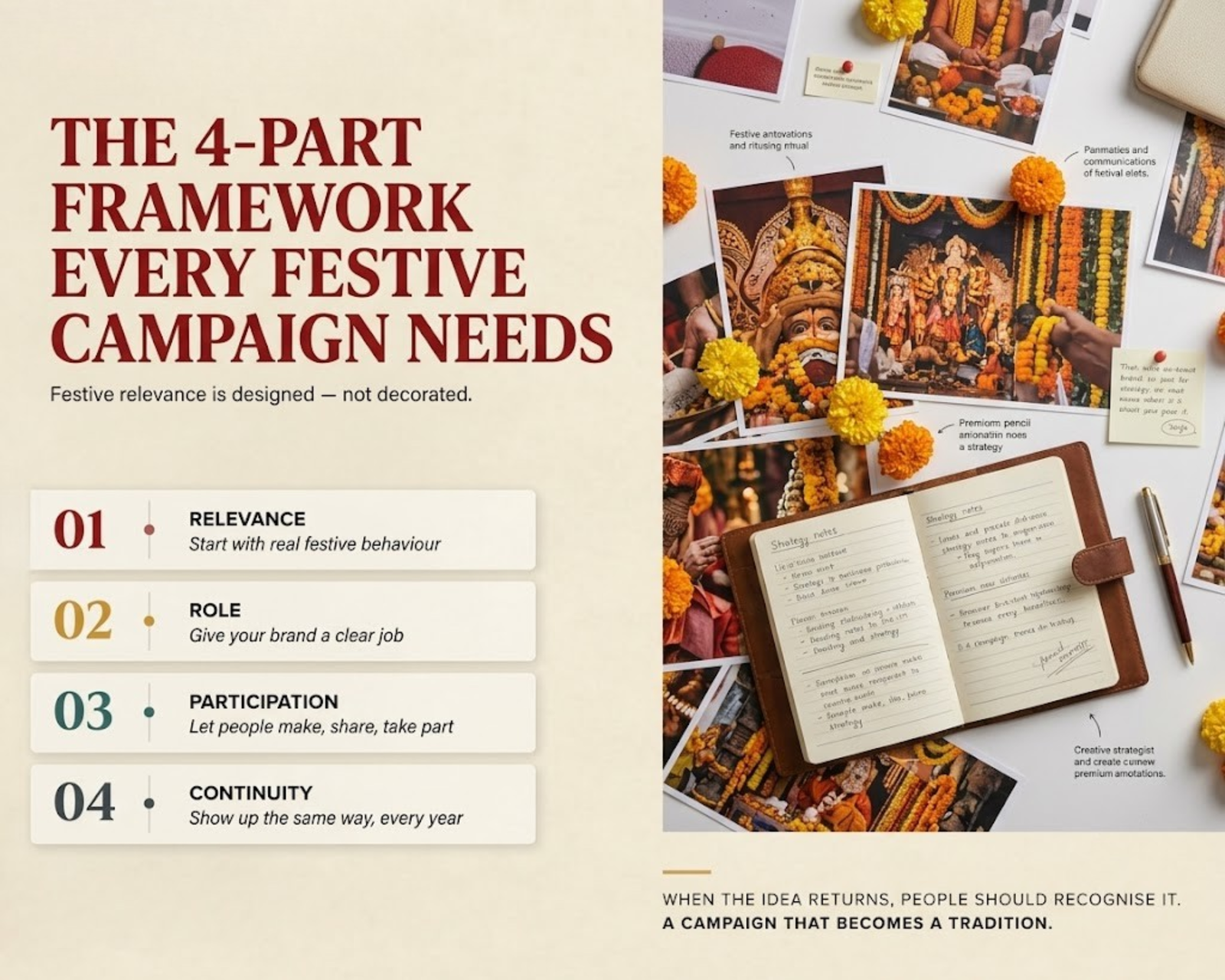
A good campaign does not need to be complicated. It needs four things.
Relevance. Start with something that already belongs in the celebration, such as a modak, a puja item, a family ritual, or a queue. The closer you are to real festive behaviour, the more natural the campaign feels.
Role. Give your brand a clear job. Is it helping people prepare, making them comfortable, or giving them something to do? A brand with no role in the festival is just decoration.
Participation. Wherever you can, let people make, choose, personalise, or share something. People care more about things they helped create.
Continuity. Don't treat the campaign as a ten-day event. If your brand finds a useful role, come back to it next year. The creative can change, but the role should stay familiar. That is how a campaign slowly becomes a festive tradition for your brand.
6 Common Mistakes Brands Make During Ganpati
1. Posting only a greeting. It is quick to make and quick to forget. If a social media post is your only link to Ganpati, people have no reason to remember you.
2. Forcing the product into the festival. Not every product needs to become a modak, and not every brand needs a giant Ganesha. People can tell when a connection feels fake. Aim for relevance first and visibility second.
3. Starting too late. Products, partnerships, on-ground activations, packaging, and approvals all take time. The best campaigns are often planned months before the festival.
4. Copying last year's success. Repeating the same idea can feel stale. Keep your brand's role the same and refresh how you show it.
5. Looking only at reach. Millions of impressions look good in a report, but they don't tell you if the campaign worked. Depending on your goal, also track participation, store visits, trials, sales, repeat purchases, and referrals.
6. Getting the tone wrong. Ganpati is deeply personal for many people. Keep your communication warm and respectful. You don't need to be the loudest brand at the celebration. You want to be a brand people are glad to see there.
How Small Businesses Can Use Ganpati Marketing
You don't need a national budget. The same thinking works locally. Here are a few ideas:
- Bakery: Sell a DIY modak box and ask customers to share their creations.
- Café: Launch a limited festive menu and add a "bring someone new" offer.
- Retail store: Put together a Ganpati essentials bundle instead of a store-wide discount.
- Salon: Offer a festive package and reward customers who book their next visit.
- Home decor brand: Share short videos of simple Ganpati decoration ideas using products customers can buy.
- Local service business: Share a Ganpati preparation or visarjan checklist on WhatsApp.
The scale is different, but the principle is the same. Find something people already need during the festival and make it easier, better, or more memorable.
How to Measure a Ganpati Campaign
"The post got good engagement" is not a result. Decide what you want before you launch, then pick the numbers that match.
- Awareness: reach, impressions, video views, and branded searches
- Engagement: participation, comments, shares, saves, and user-generated content
- Sales: conversions, revenue, average order value, and offer redemptions
- New customers: first purchases, referrals, and sign-ups
- Retention: repeat purchases, loyalty activity, and engagement after the festival
The metric should always connect to the reason the campaign exists.
Conclusion
Brands don't need to be the loudest voice during Ganpati. They need to be useful and relevant.
The campaigns people remember are rarely the ones with the cleverest "Happy Ganesh Chaturthi" line. They are the ones that did something. They helped a family prepare, made a long queue easier, gave people something to take part in, or turned an ordinary product into a fresh idea.
That is the real opportunity. Don't just look for a way to advertise during the celebration. Look for a way to add to it.
When people feel your brand made their festival a little better, the campaign becomes more than communication. It becomes a memory.
At Ontogen Digital, we help brands turn cultural moments into campaigns built on strategy, storytelling, and creativity.
Planning your next festive campaign? Visit www.ontogendigital.com and let's build an idea people remember.
Which Ganpati campaign do you still remember? Tell us in the comments.
Frequently Asked Questions
What is Ganpati marketing?
Ganpati marketing means connecting a brand, product, or service with Ganesh Chaturthi in a way that is relevant and respectful. It can include festive products, on-ground activations, digital experiences, content, collaborations, and community initiatives.
When should brands start planning Ganpati campaigns?
Ideally, two to three months before Ganesh Chaturthi. Bigger campaigns with physical activations, partnerships, or special products may need more time.
Do Ganpati campaigns need discounts?
No. A discount is only one option. You can also offer limited-edition products, useful services, bundles, rewards, collaborations, or community initiatives.
How can small businesses run Ganpati campaigns?
Focus on local relevance instead of scale. Festive bundles, DIY kits, referral offers, WhatsApp campaigns, and helpful content all work well at a local level.
What makes a Ganpati campaign memorable?
A natural role in the celebration. When a brand helps people prepare, solves a real problem, lets them take part, or surprises them with a fresh idea, people remember it.
How do you measure the success of a Ganpati campaign?
It depends on your goal. Brands can track engagement, participation, sales, trials, store visits, new customers, repeat purchases, referrals, website traffic, and social shares.
Is Ganpati marketing useful for B2B brands?
Yes. B2B brands can use the festival for employee engagement, customer stories, community work, partnerships, corporate gifting, and brand-building content.