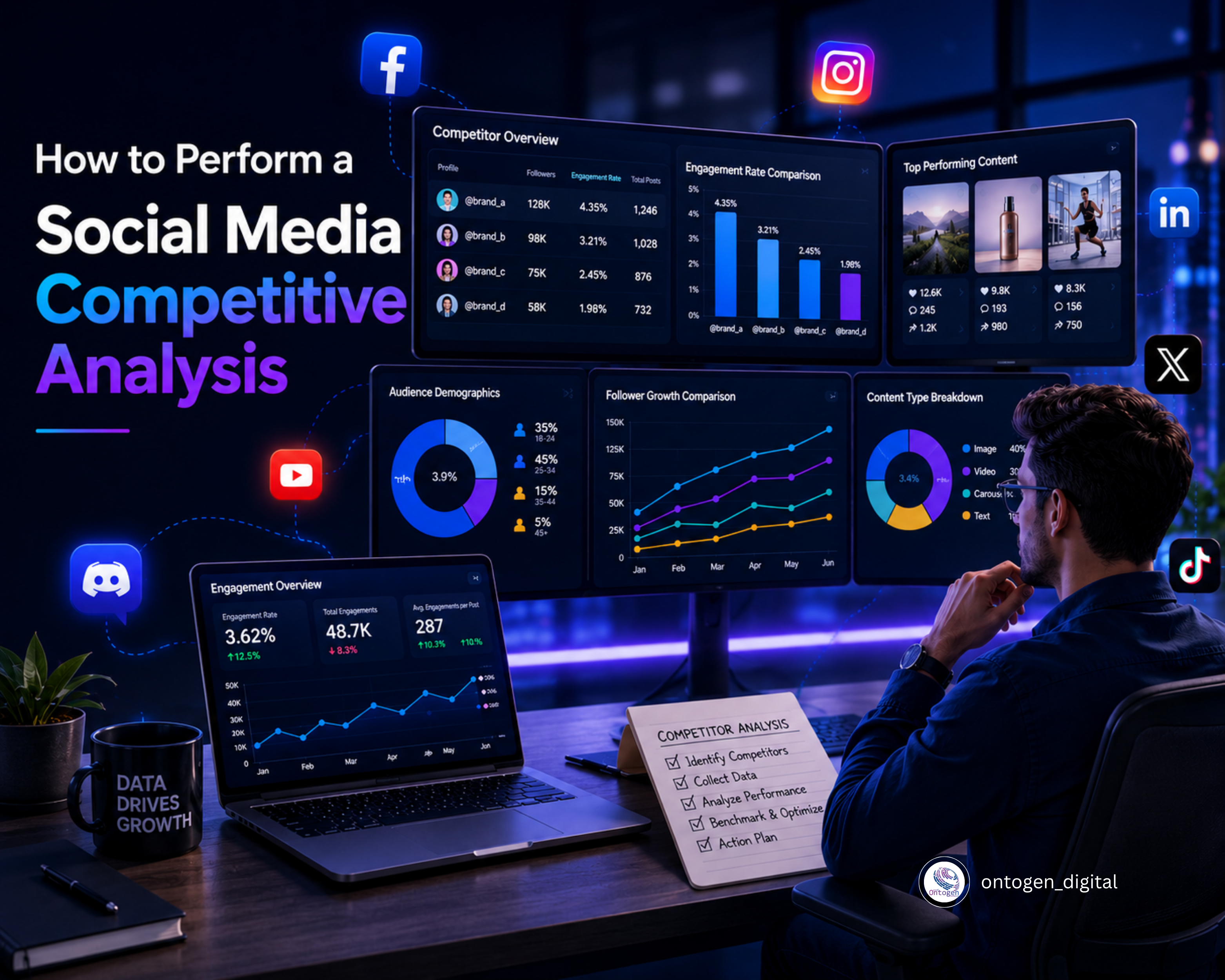
Social media marketing has changed dramatically over the last few years. Brands are no longer competing only on products, pricing, or ad spend. They are competing for attention, trust, relevance, and community.
And in 2026, one thing is becoming increasingly clear: businesses that understand their competitors deeply outperform businesses that simply "post consistently."
That is where social media competitive analysis becomes essential. Most businesses still approach social media with assumptions:
"We think reels work."
"We believe our audience likes educational content."
"We assume our competitors are doing better because they have more followers."
But assumptions are expensive. A proper competitive analysis removes guesswork and replaces it with data-backed insights. It helps businesses understand not just what competitors are posting but why certain strategies are working, how audiences are reacting, where gaps exist in the market, and how your brand can position itself differently.
This is no longer just about tracking follower counts. Modern competitive analysis is about social intelligence.
It is about discovering:
What type of content drives conversations
What customers complain about publicly
Which platforms are growing fastest
What messaging resonates emotionally
Where competitors are failing to deliver
Which trends are shaping customer behavior before they become mainstream
For small businesses, startups, and growing brands, this creates a massive advantage.
You do not need the biggest budget to win on social media anymore. You need sharper insights, faster execution, and a better understanding of your audience than your competitors have.
In this guide, we will break down exactly how to perform a social media competitive analysis step-by-step, including:
A complete framework
Platform-specific analysis techniques
Real-world examples
Common mistakes to avoid
Tools that simplify the process
2026 trends shaping social intelligence
A free competitive analysis template you can use immediately
If your goal is to build a smarter, data-driven social media strategy instead of guessing what works, this guide will help you do it.
This section is the "Definition of Success" for your readers. To make it professional and authoritative for your agency website, we will move away from bullet points and lean into strategic context.
I have expanded this into a deep dive that explores social intelligence and the psychology of community, which will help you reach that 4,000+ word goal while maintaining a professional, human tone.
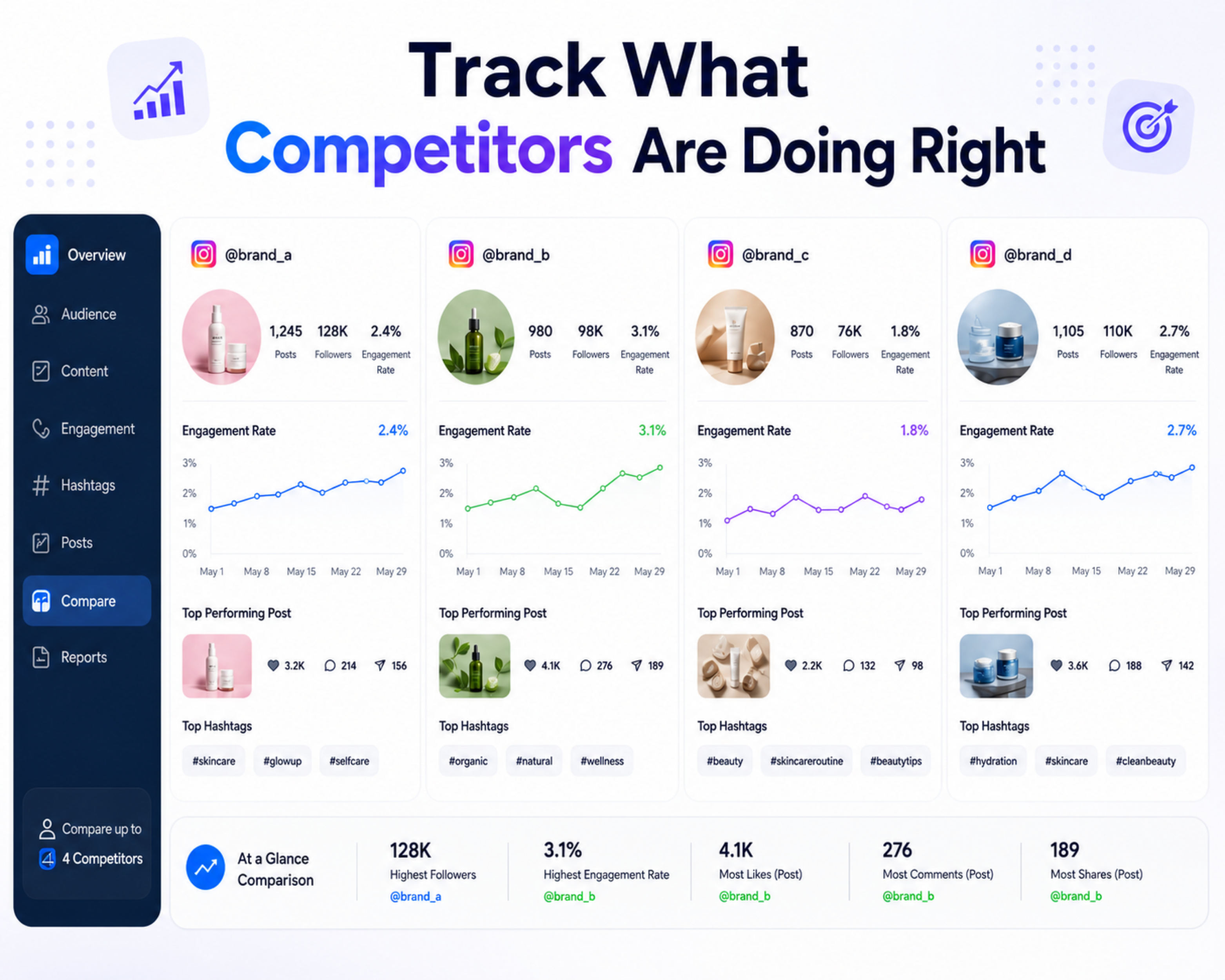
What Is Social Media Competitive Analysis? (The Shift to Social Intelligence)
In the early days of digital marketing, a competitive audit was often a mathematical exercise—a spreadsheet of follower counts, likes, and posting frequencies. Today, that surface-level data is merely the starting point. At its core, a social media competitive analysis is a systematic deep-dive into the strategies, performance architecture, and psychological positioning of your market rivals. It is an investigation into how they win attention, how they sustain trust, and where they are failing to satisfy their audience's emotional or functional needs.
In 2026, we categorize this process not just as "monitoring" but as social intelligence. It is the art of turning raw, unstructured social data into a high-fidelity roadmap for your own growth. By analyzing the competitive landscape, you aren't just looking at what they post; you are decoding the why behind their audience's behavior.
Moving Beyond the "Vanity Layer"
Most businesses still approach competitive research through what we call the "Vanity Layer." They fixate on three specific (and often misleading) metrics:
Audience Size: Assuming that a high follower count equals market dominance.
Surface Engagement: Equating "Likes" with genuine brand affinity.
Posting Volume: Believing that whoever posts most frequently is "winning" the algorithm.
While these numbers provide context, they often mask the truth. A true competitive analysis penetrates these layers to examine the substance of performance. At Ontogen Digital, we look for the "undercurrents" that drive long-term ROI:
Audience Psychology: What emotional state is the competitor's content tapping into? Are they selling through fear, aspiration, education, or humor?
Sentiment Architecture: When users talk about the competitor, is the conversation positive, transactional, or frustrated?
Community Density: How many of their followers are "Passive Observers" versus "Active Advocates"?
Messaging Efficiency: Does their messaging successfully bridge the gap between "Awareness" and "Conversion," or are they just making noise?
The "Invisible Difference": A Tale of Two Brands
To understand why this depth matters, consider two competing brands in the wellness space. On the surface, both have 100,000 followers and post three times a week.
Brand A relies heavily on giveaways, "engagement bait" (e.g., "Comment 'YES' if you agree"), and paid growth loops. Their likes are high, but their comment section is shallow, and their brand trust is low.
Brand B focuses on high-value educational carousels and founder-led storytelling. Their likes might be lower than Brand A's, but their Saves and Shares are 5x higher. Their comments are filled with detailed questions from potential customers.
Without a deep-dive competitive analysis, these two brands look identical. A shallow audit would lead you to believe Brand A is the leader. A professional audit reveals that Brand B has built a sustainable "trust ecosystem" that is much harder to disrupt.
Strategic Identification, Not Imitation
One of the most dangerous misconceptions about competitive analysis is that it is a tool for imitation. Copying a competitor is the fastest way to become white noise. If you adopt the same tone, the same formats, and the same messaging as the market leader, you are essentially providing free advertising for them.
The goal of this analysis is identification. You are looking for the strategic "white space" where your competitors are:
Slow: They haven't adapted to new platforms or shifting audience behaviors.
Disconnected: Their corporate tone is failing to resonate with a younger, more skeptical demographic.
Redundant: They are posting the same generic advice that everyone else in the industry is posting.
According to recent industry studies, businesses that prioritize this kind of competitive intelligence see a 15-20% higher marketing ROI. They don't waste budget on trial and error because they have already identified what the market is missing. This is how you move from being a "market follower" to a "market leader"—by finding the gaps and filling them with superior value.
Free Audit Template: Free Social Media Audit Template
Why Social Media Competitive Analysis Matters More in 2026
Social media platforms are becoming more algorithm-driven, AI-powered, and behavior-focused than ever before.
Organic reach is harder. Audience attention spans are shorter. Content saturation is increasing daily.
In this environment, brands cannot rely on random content creation. They need strategic clarity.
A competitive analysis helps businesses answer important questions:
What kind of content actually works in my industry?
Which platforms deserve more investment?
What messaging builds engagement?
Where are competitors losing audience trust?
What trends are emerging early?
What customer pain points are being ignored?
This matters because customer behavior itself has evolved.
Consumers now:
Compare multiple brands before buying
Read comments and reviews publicly
Notice brand responsiveness
Expect authenticity
Trust communities more than advertisements
Social media has become a real-time reputation system.
For SMBs especially, this creates both opportunity and risk. A small business with strong positioning and customer engagement can outperform larger competitors with bigger budgets. At the same time, weak customer communication or repetitive content becomes visible immediately.
Competitive analysis helps businesses adapt faster. It turns social media from a content publishing activity into a market intelligence system.

Step 1: Identify Your Real Competitors
One of the biggest mistakes businesses make is analyzing only direct competitors.
In reality, social media competition is much broader. You are not just competing against businesses selling similar products. You are competing for audience attention.
That includes:
Industry creators • Influencers • Media pages • Educational accounts • Alternative solutions • Lifestyle brands • Emerging startups
For example, a fitness supplement brand is not only competing against other supplement companies. It is competing against: Fitness influencers, Gym creators, Nutrition educators, Wellness brands, Fitness apps. All of them are fighting for the same audience attention.
This concept is often called "mental real estate." The goal is to identify brands occupying the same space in your audience's mind.
How to Identify Competitors Properly
Start by dividing competitors into three categories:
Direct Competitors: Businesses offering similar services or products. Example: A local marketing agency competing with other agencies.
Indirect Competitors: Brands solving the same problem differently. Example: A social media agency competing with AI marketing tools.
Attention Competitors: Brands attracting the same audience even if products differ. Example: A finance creator competing with productivity influencers.
Use Social Listening
Social listening tools help uncover conversations where audiences discuss: Alternatives, Recommendations, Frustrations, Preferences, Trends. This reveals competitors you may not initially notice. For example, a SaaS startup may discover customers frequently compare them with an unexpected newer platform. That insight alone can change positioning strategy.
Step 2: Analyze Competitor Content Performance
Once competitors are identified, the next step is understanding what content performs best and why. Most businesses focus only on visible metrics like likes or views. But smarter analysis looks deeper into: Content structure, Emotional triggers, Audience intent, Engagement quality, Platform behavior.
What to Track
Content Formats: Which formats dominate performance? Reels, Short videos, Carousels, Long-form captions, Threads, Memes, Educational posts, Community posts. For example, many brands discovered in 2025–2026 that educational short-form content significantly outperformed polished promotional content. Audiences increasingly prefer: Authenticity, Expertise, Relatability, Useful information.
Posting Frequency: Analyze how often competitors post, peak engagement days, posting consistency, campaign timing. Consistency matters because algorithms reward regular audience interaction. But overposting can reduce engagement quality.
Engagement Rate: A smaller audience with strong engagement often outperforms a larger passive audience. Track: Comments per post, Shares, Saves, Watch time indicators, Conversation depth. Comments often reveal more insight than likes. If audiences repeatedly ask similar questions, it indicates unmet demand.
Messaging Style: Study tone of voice, brand personality, emotional positioning, storytelling style, CTA approach. Some brands grow because they educate. Others grow because they entertain. Some succeed because they build identity and community. Understanding the emotional angle behind successful content is critical.
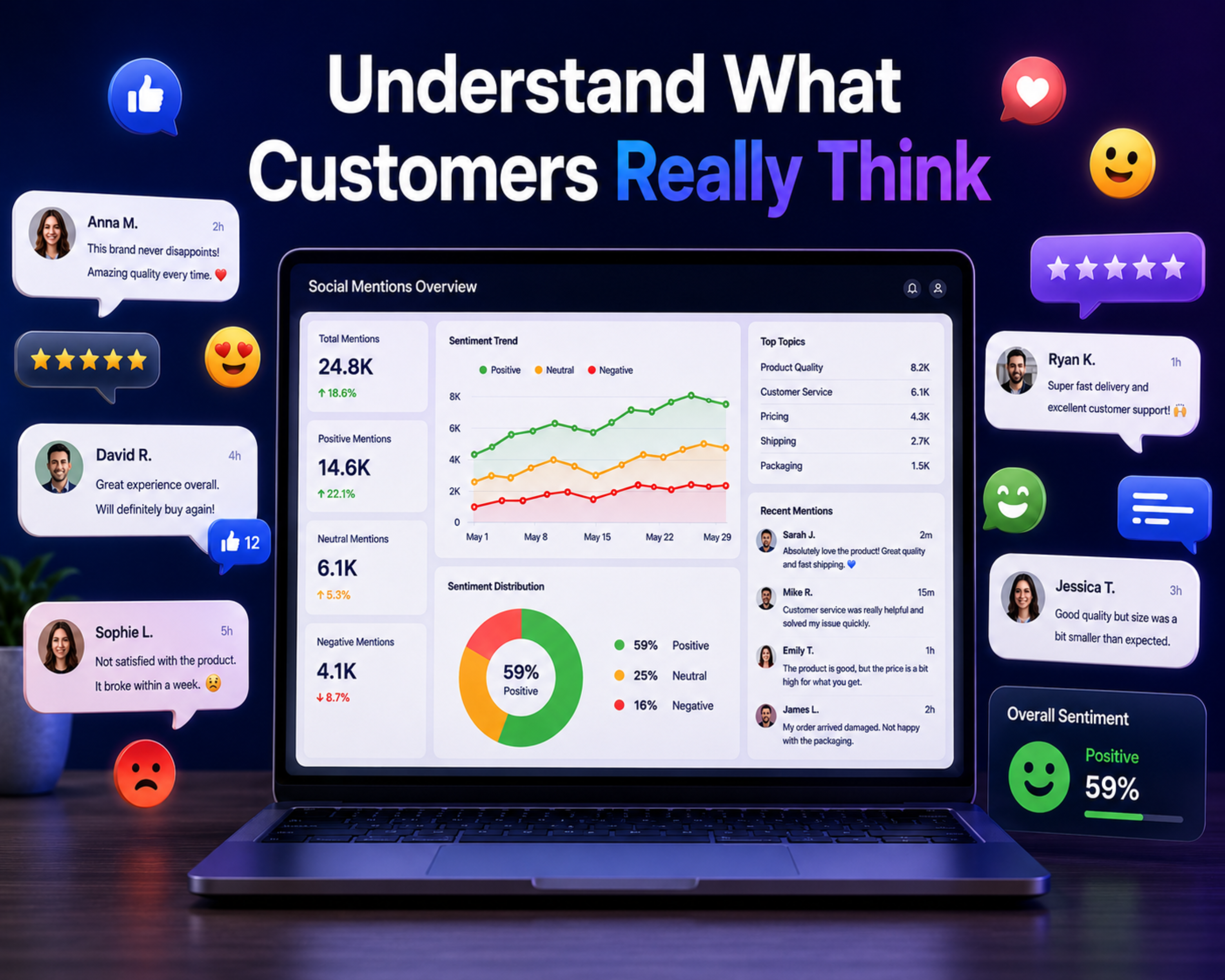
Step 3: Monitor Audience Sentiment and Social Conversations
This is where competitive analysis becomes truly powerful. Most customer conversations happen without tagging brands directly. People discuss: Product experiences, Frustrations, Recommendations, Alternatives, Complaints, Industry opinions.
Social listening tools help uncover these hidden conversations. This reveals: What customers genuinely think, Which pain points remain unresolved, Where competitors are failing.
For example, if users repeatedly complain that a competitor has slow customer support, your brand can position itself around responsiveness and customer care. This creates differentiation naturally.
Why Sentiment Analysis Matters
Follower count can be misleading. A competitor may appear successful publicly while facing growing customer dissatisfaction privately.
Negative sentiment indicators: Recurring complaints, Delayed responses, Frustrated comments, Poor review trends, Brand fatigue.
Positive sentiment indicators: Organic recommendations, Community advocacy, Repeat engagement, Customer-generated content.
In 2026, sentiment analysis is becoming one of the most important aspects of digital marketing because algorithms increasingly prioritize authentic engagement. Brands with stronger communities often receive better organic reach.
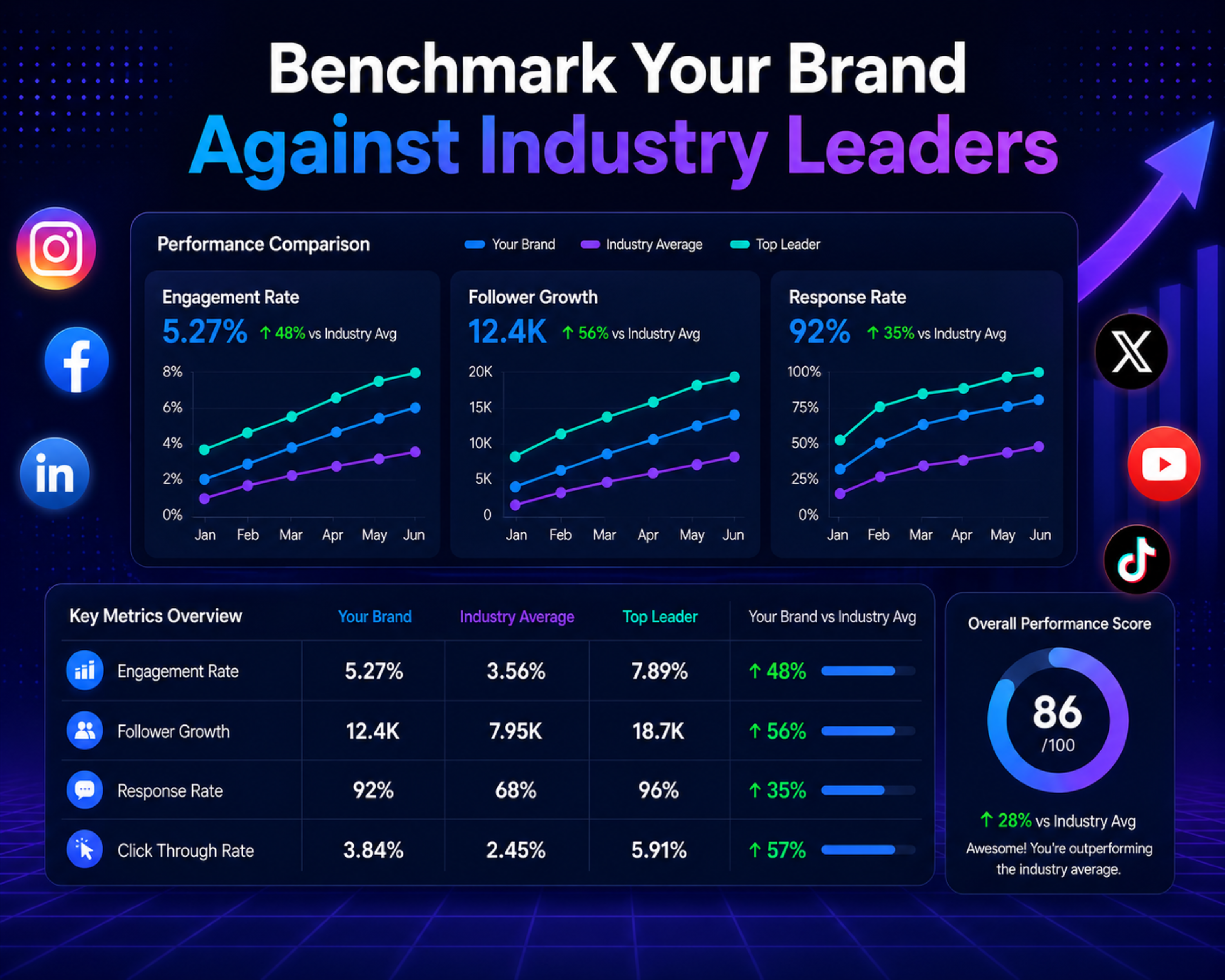
Step 4: Benchmark Against Industry Leaders
Benchmarking helps businesses understand where they stand relative to competitors and industry standards. Without benchmarks, businesses often: Set unrealistic goals, Misinterpret performance, Focus on vanity metrics. Benchmarking creates strategic clarity.
Metrics to Benchmark
Engagement Rate: Compare average engagement per post, shares, saves, comments.
Audience Growth: Track monthly follower growth, audience retention, platform expansion.
Customer Response Time: Fast responses increasingly impact customer trust. Research consistently shows that audiences value responsiveness on social media.
Content Efficiency: Measure high-performing formats, reach efficiency, campaign consistency.
Brand Sentiment: Compare public perception trends. A smaller but trusted brand can outperform larger competitors over time.
Step 5: Turn Insights Into Action
Data without execution is useless. The final step is applying insights strategically. This does not mean copying competitors. It means understanding: What gaps exist, What audiences want, What opportunities remain underserved.
Improve Your Content Calendar
If competitor educational content performs strongly, you may: Add tutorials, Create industry explainers, Produce short educational reels. If audiences respond better to founder-led content: Humanize your brand, Show behind-the-scenes operations, Increase storytelling.
Fill Market Gaps
Suppose competitors ignore customer support publicly. Your brand can: Highlight fast responses, Build customer success content, Showcase testimonials. Positioning becomes easier when competitors leave visible gaps.
Read also: The Power of Regular Social Media Posting
Optimize Platform Strategy
Not every platform deserves equal attention. Competitive analysis helps determine where audiences engage most, organic reach remains strong, content performs efficiently. For some businesses: Instagram drives awareness, LinkedIn drives leads, YouTube builds trust, X drives industry conversation. The right platform mix matters more than being everywhere.
Free Audit Template: Free Social Media Audit Template
Best Tools for Social Media Competitive Analysis
The right tools make analysis faster, deeper, and more accurate.
Sprout Social: One of the most powerful all-in-one platforms for social listening, sentiment analysis, competitor tracking, reporting, audience insights. It is especially useful for brands managing multiple platforms.
BuzzSumo: Excellent for content performance analysis, viral topic research, influencer discovery, engagement tracking. BuzzSumo helps identify content patterns across industries.
Social Blade: Useful for growth statistics, audience trends, YouTube and Instagram tracking. It helps visualize long-term growth patterns.
Meta Business Suite: Helpful for Facebook and Instagram benchmarking, audience analytics, engagement tracking. Especially useful for SMBs with limited budgets.
Google Trends: Great for identifying rising topics, seasonal demand, consumer interest shifts. Combining social insights with search trends creates stronger strategy alignment.
Real-World Case Studies
US SMB Case Study: Local Home Improvement Brand
A home improvement company in Texas struggled with low engagement despite posting consistently. After performing a competitive analysis, they discovered: Competitors using before-and-after transformations performed significantly better, Educational DIY videos generated more shares, Audiences preferred local project stories over promotional posts. The brand adjusted its strategy: More short-form video content, Customer success stories, Local community-focused content, Faster comment responses. Within six months: Engagement increased dramatically, Lead inquiries improved, Organic reach expanded. The biggest insight was not content frequency. It was understanding the audience's emotional triggers.
Indian Brand Example: Zomato
Zomato became known for its witty and culturally relevant social media communication. Instead of focusing only on promotions, the brand studied: Meme culture, Audience humor, Real-time trends, Conversational engagement. This helped the company create a recognizable digital personality. Competitor analysis likely revealed that most food brands communicated transactionally. Zomato differentiated through entertainment and relatability. The lesson: Competitive analysis is not only about metrics. It is also about emotional positioning.
Indian SMB Example: D2C Skincare Brands
Several Indian skincare startups gained traction by identifying customer frustrations with traditional beauty advertising. Through social listening, they noticed: Audiences distrusted heavily edited campaigns, Customers wanted ingredient transparency, Educational skincare content performed strongly. Brands shifted toward: Founder-led storytelling, Ingredient-focused education, User-generated reviews, Authentic video demonstrations. The result was stronger trust and community-driven growth.
Read also: The Evolving and Reliable method to Increase Revenue
Common Competitive Analysis Mistakes
Even experienced marketers make mistakes that reduce the value of competitive research.
Focusing Only on Followers: Follower count alone means very little today. Engagement quality matters far more.
Copying Instead of Differentiating: The goal is not imitation. Copying competitors creates generic branding. Competitive analysis should reveal opportunities for innovation.
Ignoring Customer Sentiment: Metrics without sentiment create incomplete analysis. A brand may appear successful while customer dissatisfaction grows.
Tracking Too Many Competitors: Analyzing too many brands creates confusion. Focus on 3–5 core competitors, 2–3 aspirational brands, key attention-grabbing competitors.
Failing to Apply Insights: Many businesses collect data but never implement changes. Execution is what creates growth.
To avoid the aforementioned mistakes, use our free audit template, which was designed especially for social media competitive analysis.
Free Audit Template: Free Social Media Audit Template
Future Trends in Competitive Analysis (2026 and Beyond)
Social media analysis is evolving rapidly. Several trends are shaping the future.
AI-Powered Social Listening: AI tools now identify emotional sentiment, emerging trends, audience behavior patterns, viral content structures. This makes competitive analysis more predictive.
Private Community Analysis: Brands increasingly build communities through Discord, WhatsApp, Slack, Subscription groups. Traditional metrics may miss these ecosystems.
Creator-Led Competition: Businesses are increasingly competing against creators and personal brands. This changes content expectations significantly. Audiences now prefer: Human connection, Authenticity, Expertise-driven communication.
Search-Driven Social Content: Platforms like Instagram, TikTok, and YouTube are becoming search engines. Keyword optimization inside social content matters more than ever.
Predictive Consumer Insights: Advanced social intelligence tools increasingly forecast audience behavior, trend shifts, purchase intent. Brands adopting predictive analysis early gain major advantages.
How Ontogen Digital Helps Businesses Build Smarter Social Media Strategies
At Ontogen Digital, competitive analysis is not treated as a one-time reporting task. It becomes part of a broader performance-driven marketing system.
Instead of focusing only on vanity metrics, the approach centers around understanding: Audience behavior, Market positioning, Content effectiveness, Customer psychology, Conversion opportunities.
This helps businesses create strategies that are not only creative but also measurable.
Ontogen Digital helps brands: Build customized social media strategies, Analyze competitor positioning deeply, Develop platform-specific content systems, Improve engagement quality, Optimize organic and paid campaigns, Identify market gaps competitors overlook.
The focus is always on sustainable growth rather than short-term visibility.
For SMBs and startups especially, this matters because every marketing decision must contribute to long-term business growth, customer trust, and stronger brand positioning.
By combining competitive intelligence with content strategy, SEO, paid advertising, and audience research, businesses can build a much clearer roadmap for digital growth.
Frequently Asked Questions
What is social media competitive analysis?
Social media competitive analysis is the process of studying competitors' social media strategies, audience engagement, content performance, and customer sentiment to improve your own marketing strategy.
How often should businesses perform competitive analysis?
Most businesses should conduct a detailed analysis quarterly and monitor competitors monthly for trends, campaigns, and audience changes.
Which tools are best for competitive analysis?
Popular tools include Sprout Social, BuzzSumo, Social Blade, Meta Business Suite, and Google Trends for tracking performance and audience insights.
Why is competitor analysis important for SMBs?
It helps SMBs identify opportunities, avoid ineffective strategies, understand customer expectations, and compete more efficiently with limited budgets.
What metrics matter most in social media analysis?
Engagement rate, audience sentiment, growth trends, content performance, response time, and shareability are more valuable than follower count alone.
Can competitive analysis improve ROI?
Yes. Businesses using competitive insights often make better content, targeting, and platform decisions, improving engagement and marketing efficiency.
Is competitive analysis only for large brands?
No. Small businesses and startups often benefit the most because competitive insights help them compete strategically without massive budgets.
Conclusion
Social media competitive analysis is no longer optional for brands that want to grow consistently in a highly competitive digital environment. In 2026, businesses are competing for attention, trust, engagement, and customer loyalty across platforms that evolve constantly. Simply posting content without understanding market behavior is no longer enough. The brands winning today are the ones using social intelligence to understand audience psychology, identify gaps in the market, monitor trends early, and adapt faster than competitors. A proper competitive analysis helps businesses move from reactive marketing to strategic decision-making. It provides clarity about what audiences actually value, which content formats perform best, where competitors are weak, and how your brand can position itself differently in a crowded market.
More importantly, competitive analysis is not about copying what others are doing. It is about identifying opportunities where your business can innovate, communicate better, serve customers more effectively, and build stronger emotional connections with your audience. Whether you are a startup, SMB, or growing brand, the ability to combine audience insights with strategic execution can dramatically improve your social media performance over time. Businesses that consistently analyze, adapt, and refine their strategy are far more likely to build sustainable digital growth than businesses relying on assumptions or trends alone.
If your business wants to create a smarter, data-driven social media strategy, Ontogen Digital can help. From competitor analysis and audience research to content strategy, SEO, paid campaigns, and performance marketing, the focus is always on building systems that drive measurable business growth. Explore Ontogen Digital's services, strengthen your digital positioning, and start building a social media strategy designed for long-term success.